Alchemical coach | Anand | Dream analyst | Intuitive | Jungian psychologist |Spiritualist | Trickster | Visionary |
Thom Cavalli
THOM F. CAVALLI, PH.D. is a Jungian psychotherapist, author and alchemical coach who provides services throughout the world. He has authored two major books, Alchemical Psychology, Old Recipes for Living in a New World, and Embodying Osiris, the Secrets of Alchemical Transformation as well as many articles in Psychological Perspectives and The Alchemical Journal. He is a yearly contributor of book reviews and film criticism for The Jung Journal. He gives a wide range of workshops and seminars at Jungian Institutes, mystery schools, and conferences. Thom will be giving a series on Jungian Alchemical Healing beginning October 2023
https://www.jungarchademy.com/cavallihealing www.AlchemicalWorks.com.

My 10 Best
(In no particular order)
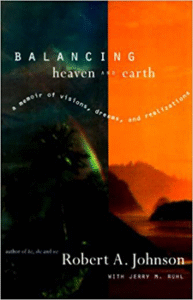
Balancing Heaven and Earth
I had the privilege of having Robert Johnson as my first analyst. I was in my young thirties when I met this great man. I don’t use the word great lightly. We’d meet at his office at St. Paul’s Episcopal Church in San Diego early in the morning. At that time in my life, I was wondering around blindly, but with his help I found my spiritual path. He was the archetypal wise old man who called me his dark brother. We could not have had more different temperaments; me, extroverted and Robert the most profoundly introverted person I’ve ever met. Admittedly, I looked to Robert as the father I never had and so sorely needed. Not only did I learn from him how to become a therapist, but his books opened my eyes to the unconscious, inner life. Robert was a mid-husband to my transition from a wily youth to a mature man. Now that he is gone, I cherish the books he’s left to us. I could have recommended any of Roberts’ books. They are all gems, simply written, gentle in tone and beautifully describe the inner workings of psyche, a Greek word meaning soul. Robert lived his life fully in touch with soul. In his elder years, he had a dream in which his pen ran out of ink. He interpreted this to mean that his writing career was over. But life had something else in store for him. One day, he was approached by a young analyst friend who said, “you’ve written about so many myths, but not your own.” Robert took this in, and having the presence of mind to consider what his friend was suggesting, disappeared into another room, came back out with a tape recorder, and said, “Let’s get started.” This is how Balancing Heaven and Earth came to be written. I think it’s his best book because it reveals the man behind the stories, a person who had a deep passion for India, dreams, mythology and Jungian psychology. The book is filled with adventures, some of which show what a kind and generous man he was with the country he loved – India. Above all, Robert was a wonderful storyteller. Robert changed my life, and I’m sure he’s helped many others who’ve had the pleasure of reading, and listening to his work. He opened the door to his “golden world.”
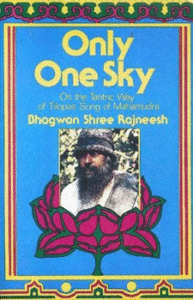
Only One Sky
There was a time when used book stores were ubiquitous. I loved hanging out in them, always searching for the next treasure. On one occasion I walked into a bookstore I’d not been to before. The proprietor and I struck up a conversation. It wasn’t long before he recommended this book, stressing that it was meant for me to read. I’d not heard of Rajneesh before, but this book drew us together in a way I could never have expected. His words spoke to all parts of me – my mind, body and soul were captivated by every sentence. As I came to learn by listening to him on tapes and records, it was his actual voice, that blew me away. Every sentence is phrased within a single breath; pure poetry. His books are mostly transcripts of talks he’d given in his ashram in India. (This was before he came to settle in Oregon.) It wasn’t long before I’d written to him, asking to be initiated as a sannyasin, i.e., a devotee. I’ll never forget the letter I received from him. The page was blank with only my new spiritual name, Swami Anand Vichara, written on the back along with his signature. In India, your spiritual name is your path to enlightenment. But, with Osho (as he was later called) there is no path. You are already enlightened, and you just have to realize that as fact, and behave accordingly. For the next few years, I wore a mala around my neck and dressed in orange, the color of fire. My given name, meaning blissful thoughts, has indeed become my path as a therapist, teacher and writer. Many years would pass before I adopted a new view of Osho, the man, not the guru. The Oregon ashram was to my mind a disaster. People were poisoned while Osho sat behind the scenes meditating and having sex with some of his followers. I was shocked, angry and hurt when two reporters filmed a video series that exposed him and his top lieutenants for crimes being committed at the ashram. I wrote a critical review of the series that was published in The Jung Journal. It took a long time to accept the shadow of my old guru without throwing away the brilliance of his message. Warning: it takes daring to read Osho and not be completely swept away by the challenge of fully, and completely living life as an awakened, enlightened human being. In the heyday of his popularity, many of his books were bound in silk! Indeed, he was a man with a silken tongue whose words never fail to move you. Osho is a disrupter, and for better or worse, his books will change you.
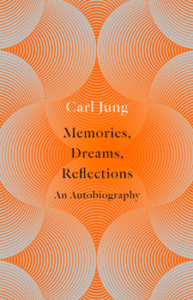
Memories, Dreams, Reflections
Being a Jungian therapist, people often ask me where to start reading Jung. Without hesitation, I always tell them to begin with this biography. Jung wrote the first four chapters and the rest was written by Aniela Jaffe who recorded his words. Despite Jung saying that he was glad not to have been a Jungian, I count myself as fortunate to be one. In fact, I feel as though I was born a Jungian. His psychology is my psychology. This book describes the life of a genius who dared to confront his own demons and find his true self. Unlike most of his books this one is easy to read, a real page-turner. It gives insight not only into the workings of his mind, but sheds light on how his theories emerged from a life filled with inner and outer adventures. There are many biographies written about Jung, but none that put you in the shoes of someone who’s travelled the byways of the unconscious mind. More than any other psychology, Jung set me down a path that gives my life meaning and purpose. This book demonstrates the trials and tribulations he faced in his own individuation process. From the very first pages he describes his earliest dream, and by example how important dreams are to this process. This isn’t a theoretical book, but rather a work that reveals the twists and turns of becoming whole. We learn about Jung’s “confrontation with the unconscious” that he suffered after his breakup with Freud, and how he emerged from the near-psychotic experience as his own true self. We accompany him on incredible travels throughout the world where the universality of the archetypal world is in stark evidence. Special to my studies, Jung tells of how he fell into the rabbit hole of alchemy, and how absorbed he became for some thirty years of studying this amazing subject. The work of psychological and spiritual alchemy aims at the union of spirit and soul, the mysterium coniunctionis. This book is not intended to be a guidebook, but I find it inspiring and illuminating, one that demonstrates an adventure in consciousness that know it or not, we are all on.

The Emerald Tablet: Alchemy for Personal Transformation
I was in the final stages of having my first book on alchemical psychology published when I discovered the author of this work, Dennis Hauck. I was at the annual Los Angeles Book Faire when I just “happened” to find this book. I won’t forget the feeling I had when I read it, and thought, “He’s written my book!” and it’s a bestseller! When I was able to put my envy aside and think more positively, I realized that Dennis had brought much needed attention to this occult subject He did so in a way that demystifies alchemy and more importantly how to apply it in everyday life. The Emerald Tablet is named after a mysterious set of recipes that encompasses the basic tenets of alchemy. Even Isaac Newton had his own translation of these alchemical formulae. There is a fine line between psychology, alchemy and religion because the belief central to all three is that we are born unfinished and need working guidance in changing the lead of our unconscious mind into a highly refined, subtle being. Dennis traces back the discovery of the Emerald Tablet and gives guided tours (meditations) through each of the seven recipes and the alchemical stages they represent. Not long after reading Dennis’ book I had the pleasure of dining with him. He is a gentle, introverted and smart person who practices what he preaches. At the time, Dennis was a step ahead of me in his writing career, and was generous in giving me guidance for my own alchemical work. He is surprisingly ambitious and creative in projects that put alchemy into a new (and more accurate) context. A few years after our meeting, Dennis organized the Alchemy Conferences, a series that began in the smoky back rooms of a Las Vegas casino, and evolved into larger venues, including the LA and Long Beach convention centers. I was honored to give the first keynote address. Along the way, me and Dennis have become friends, and colleagues. Our writing has us traveling along a similar alchemical road, his more philosophical and mine, psychological. We share a common vision for the future directions of alchemy that always hinges on its main goal – the meeting of soul and spirit, matter and psyche, science and psychology. In addition to new books, Dennis is also curating an expansion of the alchemy exhibition at the Rosicrucian headquarters in San Jose, CA. I’ve had Dennis to my home where he entertained us with wild tales of digging up huge worms in the Black Forest under the direction of a master alchemist. He literally lived the alchemical adage, “It’s in the dirt!” The Emerald Tablet is informative and fun to read. It’s a popular book that invites readers to delve deeper into this incredible spiritual tradition.
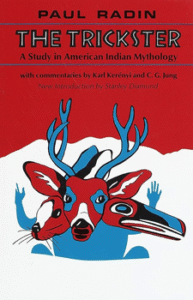
The Trickster
I have my brother to thank for giving me this fascinating book. He gave it to me as I was working on my doctoral dissertation. At the time, I was treating substance abusers, and began reading Jung to gain a deeper insight into the unconscious dynamics of drug addiction. In the process, I discovered that Jung contributed to the founding of Alcoholics Anonymous, telling Bill W (it’s founder), “spiritus curateur spiritus,” meaning that only spirit heals spirit. Jung’s words imply that there are two levels associated with that word, alcohol, one that refers to distilled spirits and the other relating to an influx of divine energy. In a similar way, I viewed drug addiction as a crude desire to join with spirit. If only, I thought we could make the unconscious conscious, drug dependent people could achieve a higher level of consciousness without polluting their bodies. Tricky business! I also realized a mutual dynamic taking place in my therapy sessions: each of us, therapist and patient, were manipulating each another albeit on different levels. In the process both of us were changed. This was, to use Jung words, at the heart of the therapeutic process. He wrote, “The meeting of two personalities is like the contact of two chemical substances: if there is any reaction, both are transformed.” This is how I met the trickster, and began exploring how this wily spirit can be your best ally or your worst enemy. It all depends on how conscious a relationship you have with this archetype. Radin’s book tells the story of Kunu, a trickster par excellence drawn from the Winnebago’s myths. In funny and terrifying tales, the book describes the evolution of this character from an unconscious animal creature to a highly conscious hero of his tribal community. This Native American tale recalls Medieval stories of the cocky, young fool who eventually becomes a knight through heroic deeds. As a psychologist, I can trace the very same evolution in the development of a person’s lifespan. And to think, that such a profound understanding can be found in this (and many other) myths shows the psychological insights ancient people had into the workings of the soul. Wow! And, as an added surprise, the book concludes with a great, very concise essay by Jung on the psychological meaning of the Trickster as an anti-hero. I was so impressed with this book that I ended my graduate education by writing my dissertation on this archetype, and having a paper called the Cosmology of Chance published in a Jungian journal. Along the way, I met Mercurius, the patron, spiritual trickster of alchemy!
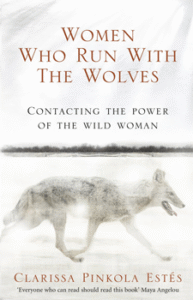
Women Who Run with the Wolves
This book came to me during the time when the feminine movement was in its heyday. While women were burning their bras and protesting across the country, Clarissa Pinkola-Estes was busy recalling mythic stories that described the hidden power of the Feminine. I was so impressed with this book that I bought many copies that I would hand out free to my patients, male and female. It was published two years after Robert Bly’s book Iron John came out. The two are a wonderful pair that beautifully represent the archetypal Masculine and Feminine. The two authors are also very well suited to tell these powerful stories. Robert Bly was a poet who, along with others held groups that helped men get in touch with true masculinity. I was fortunate enough to meet him in Prague. Although he was the moderator for a major alchemy conference, he arrived late. He whizzed in and grabbed a seat next to me. We later drank beer together along with others in the group as we listened to heavenly music coming from a nearby church. I fondly recall him reciting poetry in that Gothic cathedral later that evening. Clarissa Pinkola-Estes, a Jungian analyst, describes herself as a contadora, one who sings out mythic stories. The first line of the line in the foreword to her book speaks directly to women. “We are filled with a longing to be wild.” And the last line reads, “the shadow that trots behind is definitely four-footed.” I get shivers when I read these words! They draw us back to the primeval intimacy that women have with nature. The dozen myths in the book are accompanied by adjoining commentaries that interpret the texts in a clear and personal way. You feel like you’re sitting around a campfire with Clarissa singing like a shaman. She tells us about Blue Beard, the Handless Maiden and the silkies that bring these mythic figures to life. Men too need to hear these myths and appreciate the instinctive power of the Feminine, both in their mates and in themselves. In Jung’s psychology, the feminine is veiled in the anima, the soul that resides within a masculine psyche. By uniting the feminine soul and the masculine spirit we are made whole, and holy!
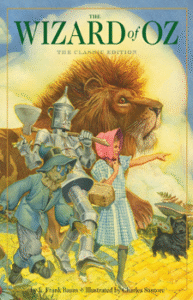
The Wizard of Oz
The fourteen books that led to the well-known movie were written by Frank Baum and William Wallace Denslow. The original series was called The Wonderful Wizard of Oz. There are many different ways to understand and appreciate this classic. I’ve loved this story since childhood, and have over the years come to realize its archetypal power. It is a story of the individuation process of Dorothy as she develops from a naïve little Kansas girl into a mature woman. What makes this story so compelling is how she is symbolically torn apart and reconstituted into a new form. Each of her personality parts – the Lion, the Scarecrow, the Tin Man – represent “inferior” aspects, those that must first be separated and then brought back together. Even the Witches and Oz himself are essential parts of her. I love using this story in teaching psychological alchemy because it illustrates a basic alchemical recipe, solve et coagula. Like the Biblical Garden of Eden story, Oz describes awakening into consciousness. The Wizard of Oz is a spiritual story that we can all appreciate because each of us undergoes similar breakdowns and repairs in our own unique way. At first, we think that the Wizard is a sham, but once exposed he has Dorothy realize that she had the courage, smarts and heart needed to become a mature woman all along. All she had to do is click her ruby red slippers and she was back home for the very “first time.”

The Secret Teachings of all Ages
I was lucky enough to obtain a leather hardbound copy of The Secret Teachings in a NYC used bookstore. It is hard to believe that Manly P. Hall was only 26 years old when he wrote this voluminous study of the world’s occult systems. The range of Hall’s scholarship goes even further to many more books and lectures he gave at his conference center, the Philosophical Research Center (PRS) in Los Angeles. He wrote over 150 books and gave some 8,000 lectures!! It is hard to express the thrill I had giving a talk from the stage and podium of this giant. And then, there is the library! I think of libraries like this one as if they are churches. People speak in hushed voices, and the smell of old volumes and lacquered book shelves permeates the air. When Jung first discovered alchemy, he requested booksellers to be on the lookout for alchemical manuscripts. Hall is alleged to have been one of those who provided Jung with alchemical books. For a time, PRS was in financial peril and to bring in funds, sold their alchemy collection to the Norton Simon Foundation. The occult world is really the story of different ways we access spirit. It represents the flip side of consciousness and empirical science. Not only do we physically evolve but there is also a concurrent process of the involution of spirit. More and more, the gap between science and the unconscious is closing with quantum physics and depth psychology leading the way. Manly P. Hall is a pioneer who describes this development that is filled with insight and information that is rare to come by.
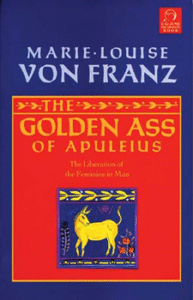
The Golden Ass of Apuleius
As if choosing just ten books weren’t challenging enough, selecting one of von Franz’s many incredible books is virtually impossible. They’re all great! I think this version of the Apuleius story is a masterpiece. Von Franz met Jung as a young girl of 18 years old. Jung took her into analysis in exchange for her help in translating ancient Latin and Greek texts. Over many years, von Franz proved herself to be a master at giving voice to Jung’s complex language. The scope of her work includes fairytales, alchemy, physics and mythology. Her complete collected works are being published serially each year. There are to be 28 volumes in all. The Golden Ass is the only complete Latin book of fiction to come out of the Roman Empire. It is a wild collection of adventures lived by Lucius, a dabbler in the occult who accidently is turned into an ass. One of the stories within this humorous tale is especially spiritual – the myth of Psyche and Amor. Translated, psyche means soul, and amor (eros) is love. These two are personified in the story as a young man (Cupid) and a naïve, young woman. Some say it is the greatest love story to come to us from ancient Greek mythology. This particular story reminds me of Beauty and the Beast, but unlike the Disney movie it has deep undertones of love eternal. Psyche is extremely beautiful, but will only succumb to someone who truly loves her. Aphrodite, the goddess of beauty, is jealous and condemns Psyche to marry a beast. Her parents resign themselves to their daughter’s fate, and Psyche is brought to a palace to be wed. She is led into a completely darkened room where she cannot see the monster. Despite being told of his wretchedness, he is kind to her, and soon, Psyche is pregnant. Barred from seeing him, she asks who he is, but this he says he cannot answer. Egged on by her sisters’ suspicions that the beast will eventually kill her, Psyche attempts to murder her husband while he sleeps. As fate would have it, she spills some wax from a candle that awakens him, and there to her amazement she sees a beautiful god, Cupid. Sadly, he flies off, leaving Psyche’s fate to the whims of Aphrodite. The tale goes on to describe three tasks Psyche must do if she and Cupid are to be rejoined. All but one is impossible. In the end, Cupid comes to her rescue with the intercession of Zeus who immortalizes them. One need only imagine the spiritual and psychological meaning of joining soul with love. This story describes the mating of a god and a human, an apt metaphor that describes the divinity hidden in each of us if only we integrate the two. As for Lucien, he is eventually transformed back into human form after Isis comes to his aid. There is hardly space here to fully tell this magnificent story that is filled with deep spiritual insight. No one, in my opinion, can better articulate the dynamics of the psyche than von Franz.
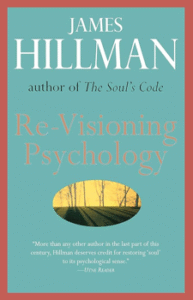
Re-Visioning Psychology
Maybe because I’m from New York and Hillman is from New Jersey, there is some built-in enmity. I always found him smug, a bit arrogant but also, brilliant. This book arrived while I was in the midst of graduate school and it created quite a stir in the Jungian community. Some thought of him as the next Jung, but he was often seen by some as a gadfly, one who trifled with words. But no one can deny that he opened up a new chapter in Jungian psychology in a couple of very important ways. On receiving my doctoral degree, I was invited by my chair person, Dr. Christine Downing to a party at her home. To my surprise, Hillman was present. At the time, he had often asked the question, “What does soul want?” His book was an attempt to return psychology to its mythopoetic origins. He emphasized a polytheistic perspective, a move away from Jung’s centralization around the Self archetype. He laid the roots for archetypal psychology, shifting focus from the individual to the collective, a collective that includes the whole pantheon of gods. I must admit that I was caught flat-footed by his question. I felt put on the spot and could hardly answer his question. It felt like I was having to defend my dissertation all over again. When much later I was able to put his question in the context of what I had researched and written about in my dissertation, I realized that my concentration was on spirit, not soul. “How does spirit move?” would have been a more relevant question for me, but I could hardly expect that the great Hillman knew anything of my work. In subsequent writing I have delineated the difference between soul and spirit, the one being archetypally Feminine, and the other Masculine. Many years later, I attended one of Hillman’s lectures. Afterwards, I asked hiM to sign the hard-bound copy of this book. He signed, smiled, and said that this copy would be worth a lot of money someday. And indeed, he was right. I value it not for the price it might catch, but for the memory it holds and the message that it signifies – the psyche (soul) has roots deep in the soil of our imagination. Hillman is a poet who see through things to their life in the mundus imaginalis. His description, let’s say of the ear as a feminine organ of the head “maximizes attention and minimizes intention” are the words of an artist who has an exacting ear for psychological meaning hidden within the object. More than a wordsmith, his writing is more than a play on words, they reveal the occult nature of things that make up our world. To speak of archetypes as gods and goddesses brings them into our living room. We begin to understand that the psyche isn’t something inside us, but rather it is we who are inside it!