
Meditation facilitator and Teacher | Retreat Leader | Podcast Host | Chocolate Lover | Creator of Beauty | Hopeless Romantic |
Steve Farrell
From the pinnacle of Silicon Valley success as co-founder of two high-tech firms, Steve Farrell pivoted to lead Humanity’s Team, a global non-profit organization based in Boulder, Colorado, co-founded with bestselling author and teacher Neale Donald Walsch in 2003 with the mission to make conscious living pervasive by 2040 and help people everywhere awaken to our interconnectedness.
He is the author of “A New Universal Dream, which details his journey from the American Dram to conscious leadership, and co-founding Humanity’s Team, which helps people throughout the world awaken to their deeper self and the interconnectedness of everything in the universe, and provides educational programs supporting people on their conscious journey. Every dollar of revenue — 100% — goes toward our work supporting conscious evolution, planetary awakening, and flourishing at every level of life.
Steve and his team envision a new future that creates a sustainable earth, allowing all beings and our planet to flourish at every level of life — and a world free of outdated and limiting beliefs about the Divine, one another, nature, and all of life.
ANewUniversalDream.com
https://www.humanitysteam.org

My 10 Best
(In no particular order)
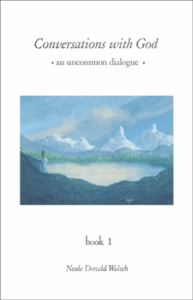
Conversations With God Book 1
Christmas, 1986, my American colleague, Julie, gifted me one of the first paperback editions of The Prophet, by Kahlil Gibran, in which she inscribed: “Paulette, May this bring insight and comfort to you”. That was five years before my brother Peter’s death…before I’d wake up to my true divine identity, be introduced to the calming effects of meditation and spiritual practice, or discover that meditation was my soul’s gift and life’s purpose. Back then, even without the deep understanding or spiritual intelligence I’ve since cultivated, I meditated on Gibran’s hypnotic poetic words as they soaked into my parched soul, and stirred up wisdom and divine longing buried deep in the untapped stillness of my being. Almost 40 years later, the book, now yellow and aged, still unveils unexpected and timeless kernels of insight and comfort…just as Julie had wished for me.

Tomorrow’s God
I was a novice student of metaphysics when this classic Louise Hay bestseller came into my life in the mid-1990s. By the time I spotted it on the shelf in a quirky out-of- the-way bookstore in Bromley, Kent, I was already familiar with the might of affirmations, affirmative prayer, and the power of our words to create our lives. This “Little Blue Book”, as it’s affectionately dubbed, became part of my physical, mental, and emotional medicine chest. In fact, to this day, it’s still one of my go-to books at the first twinge of pain or discomfort. But, in addition to the comprehensive compendium of physical ailments and their affirmative mental equivalent, what I also absolutely love about this book is Louise Hay’s “Loving Treatment” at the back of the book, which I memorized by heart and regularly affirm the first few lines to myself.

Home with God
Simply put, Acts of Faith changed my thinking—and my life. After my brother Peter died, and I found myself mired in inconsolable, unrelenting grief, this 365-daily devotional was one of the first books my friend Jean gifted me. It sat on my bedside table, and each day I’d look forward to reading the day’s reflection—much like other people look forward to reading their daily horoscope. Written in her frank, sometimes irreverent kick-in-the-butt style, it often felt as if I was immersing myself in the New Thought-inspired gospel according to Iyanla Vanzant, with my own front pew seat. I ended up buying copies for many family members and friends so they could become part of the daily congregation too. In the past three decades since the book came into my possession, I’ve engaged with this devotional regularly, at times reading the reflections daily for the entire year and, at other times, just dipping into one of my favourite passages. Then, in 1996, when Simon & Schuster published its beautiful hardcover gift edition of the book, complete with a posh vellum dust jacket, I purchased myself a copy. And, in calligraphy handwriting, I inscribed it with the following: “A gift from Self to self, in honour of your greatness and beauty of spirit”. As I had done with the paperback version, I also bought a gift edition of the book for several women in my circle. All these years later, their copies, like mine, still have pride of place on our bookshelves.
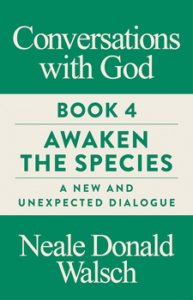
Awaken the Species
I had completed seminary and was interning for a year in the Retreats Department at Unity Village when I came across this book in the Unity bookstore. As a new student of Kundalini Yoga, which extensively uses mudras in its asanas and kriyas, some of the mudras in the book were already familiar to me. However, I’m not exaggerating when I say, as though with soul recognition, my heart skipped a beat as I leafed through the pages of black-and-white photos depicting yogic hand and arm positions with detailed instructions for how and when to use them. The guidebook of descriptive instructions covers an extensive variety of mudra positions designed to, among other things, enhance meditation, minimise pain, anxiety and depression, improve mental clarity, create inner peace, sharpen intuition, and even heal a broken heart. Enamoured by Mesko’s instructional text, after years of regularly using many of the mudras in the book in my personal practice (though not the broken heart one, thankfully), I began incorporating a number of them in my meditation classes, retreats, and guided meditations. I was also inspired to create a Twelve-Power Mudra meditation, a Chakra Mudra practice, and a mudra workshop called The Power in Your Hands.
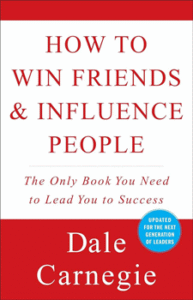
How to Win Friends and Influence People
This book fell into my hands while I was enrolled in a psychotherapy and counselling certificate evening course at Regent’s College in London. It was so compelling I couldn’t put it down! On my long commute to and from college, I would devour as much of the storyline as I possibly could before arriving at my stop on the Tube. The book tells the saga of how, one by one, the narrator comes across the Eight Insights embedded in a mysterious manuscript while travelling through the Peruvian jungles. Though it’s a work of fiction, filled with tension, drama, and thrilling chases, the text reads like a spiritual guidebook. It highlights the power of divine synchronicity, energy fields and auras, intuition, the gift of our dreams, living fully in the moment, and the benefit of seizing those unexpected opportunities life sometimes tosses our way. My best friend Andrea and I read the book at the same time. Decades later, we still reference it whenever our dialogue veers into topics of synchronicity, intuition, and energy…which is often.
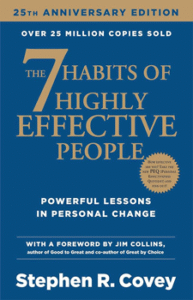
The 7 Habits of Highly Effective People
This book and its author, whom I still endearingly refer to as Coach Maria, have enormously impacted me and my relationship with money. I read it in 1999, a few months after arriving in the USA to attend seminary at Unity Village in Missouri. My foreign student visa did not permit me to work, yet I had left behind a mountain of debt back home in the UK that I was still responsible for paying off monthly. This book, which shows how money, time, love, and creativity are intrinsically linked, threw me a lifeline. It challenges the reader to consider one’s relationship and history with money, how to dismantle one’s structures of knowing—some of which stem from childhood— and upgrade one’s definition of abundance, the role forgiveness plays in our relationship with money, the importance of adhering to our standards of integrity, our willingness to be coached, and so much more. I gave my copy away after about 18 years, but many of the lessons I learned…and applied…I still use in my life and work to this day.

The Great Game of Business
Culture shock was the furthest thing from my mind when I gave up my job, sold everything, and, virtually penniless, moved from the UK to the USA to attend seminary to become an ordained Unity minister. While I had a vague idea of what culture shock was, I didn’t expect to be experiencing it. After all, we speak English in both countries, have comparable social structures, watch some of the same movies and TV shows, eat similar foods, Etc. Yet still, I felt like a fish out of water., Once it dawned on me what was going on and why I felt so discombobulated, isolated, and even misunderstood, the book Finding Yourself in Transition became a tremendous resource for navigating my way through growth-inducing change. Of course, I’ve experienced numerous other life shifts since completing seminary over two decades ago. Whenever I find myself in flux, the book’s gamut of psychological wisdom paired with Eastern and Western mysticism, metaphysical Bible interpretation, and the loving, clear intelligence of its author, continues to be a road map that steers me through those times of change and extra curricula hell-in-the- hallway voyages, where one thing has ended and the next has not yet begun.

Crossing the Chasm
After completing seminary, I stayed on an extra year in the States for an internship and to complete an undergraduate degree. At some point during that extension, I was inexplicably guided to engage in a self-guided forty-day Silent retreat. At the time, I didn’t quite understand why I was being called to come apart for this extended sacred Sabbath. After all, aside from a monthly day of Silence practice—which I’d begun in January 2000 and maintained ever since—up to that point, the most time I’d ever spent in Silence was about four days. Yet, a few months later, here I was, nestled in my little hermitage in the woods in Easton, Kansas, with this book by Wayne Muller as one of the titles in my sparse collection of reading materials on the bookshelf. Intertwined with sample stories, exercises, and wisdom teachings about the imperative life-saving need for sacred downtime are also poems and practices to experiment with when cultivating our own self-styled Sabbath. The aptly-titled book currently sits atop my credenza in my office. It’s not there collecting dust as a glorified coaster. No, this soul-enhancing companion deliberately takes prominence in my workspace. It’s a constant reminder to relish self-care and take the kind of sacred rest that provides a level of wealth no amount of money strived for or attained could ever buy.

Benjamin Franklin: An American Life
In preparation to first become a Licensed Unity Teacher and then attend seminary to become an ordained Unity Minister, I studied metaphysics and metaphysical interpretation of the Bible. This book, which came out the year before I headed off to the United States for seminary, not only includes practical information for how to study and understand the Bible metaphysically, but also how to select a Bible from the array of versions that exist, as well as how to use concordances, dictionaries, commentaries, atlases, and handbooks as part of one’s Bible Study Tool Kit. One doesn’t have to be a Bible scholar for Wisdom of a Lifetime to make sense. Any layperson can use and benefit from its clear references and instruction and be inspired to take the Bible down from the shelf, dust it off, and dive in to rekindle interest in The Good Book and find relevance for its content in our modern-day lives.

Einstein: His Life and Universe
I featured Cami Walker on my Touching the Stillness radio show the same year her inspiring book came out in 2009. I was so taken with Walker’s story, and the practice the book’s title refers to, that I just knew I wanted to introduce her to my audience. The book’s prologue gives the back story of her battle with multiple sclerosis—a devastating diagnosis she received at age 31, just one month after her wedding to her husband Mark—and how she was introduced to the idea of giving away a gift every day for 29 days. Then in a daily journal style, the author shared how she came up with each day’s gift and gave insight into the changes that occurred in her life as her first 29-day practice progressed. I say her first 29 days because, in the book’s epilogue, Walker catches the reader up on how the 29 Gifts turned into an ongoing 365-day practice for Walker and initiated an entire movement called the 29 Gifts Challenge. It ends with examples of some of the 29 gifts given away by the thousands of people around the globe who, like me, subsequently engaged in the Challenge. As the book jacket aptly describes, Walker’s account is “a poignant and unforgettable story of embracing the natural process of giving and receiving”. Sadly, Cami Walker died in 2020, but her legacy lives on in those of us who, energized by her story and example, were motivated to engage in the practice that transformed parts of our lives too.