
Wisdom sleuth | Purveyor of ideas | Pragmatic mystic | Loyal companion | Walker | Storyteller |
Philip Goldberg
Philip Goldberg is the author or co-author of numerous books; a public speaker and workshop leader; a spiritual counselor, meditation teacher and ordained Interfaith Minister. His books include American Veda – From Emerson and the Beatles to Yoga and Meditation, How Indian Spirituality Changed the West; The Life of Yogananda – The Story of the Yogi Who Became the First Modern Guru; The Intuitive Edge: Understanding and Applying It in Everyday Life; and Spiritual Practice for Crazy Times: Powerful Tools to Cultivate Clarity, Calm and Courage to name just a few.
A Los Angeles resident, he cohosts the Spirit Matters podcast, leads American Veda Tours, conducts online courses and workshops, and blogs regularly on Elephant Journal and Spirituality & Health.
https://philipgoldberg.com

My 10 Best
(In no particular order)
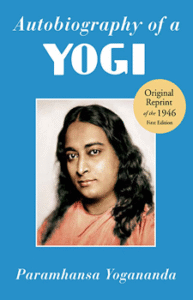
Autobiography of a Yogi
Yogananda’s iconic memoir has inspired and informed more East-leaning spiritual paths than any other book. I first read it in 1970, and I still have that five dollar hardcover, which I borrowed from some forgotten friend and never returned. Published in 1946, the seminal text is more than a unique life story (in fact, Yogananda left out so much that I was inspired to fill in the gaps by writing a biography of him). The book also offers a primer on yogic philosophy and practices; profiles of extraordinary people; vivid glimpses of Indian culture; and more miracles and wonders per page than the Bible, along with rational, science-oriented explanations for them. Yogananda said the book would keep his legacy alive long after his passing, and he was right; he died in 1952 and the book continues to open minds – including mine, as I reread it once again for a course I’ll be teaching.
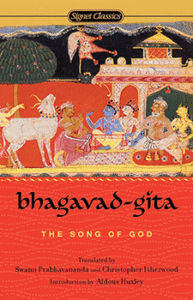
The Bhagavad Gita - The Song of God
I first heard about the Bhagavad Gita from Henry David Thoreau, who sang its praises in Walden. I thought that if Thoreau found that book so rewarding, maybe I should take a peek. I went to several book shops and couldn’t find a copy—in New York City! Then I discovered Weiser’s, a so-called “occult bookstore,” and took home the translation and commentary by Swami Prabhavananda and Christopher Isherwood—a perfect match of knowledgeable expert and gifted writer that also produced other books I would soon devour. I was hooked. The Gita is called a Hindu scripture. It can also be considered a spiritual guidebook, a self-help manual, a philosophical treatise, or a psychology text. It contains the pithiest formula for balancing a deep spiritual life with worldly responsibilities I know of: “Established in Yoga [i.e. unitive consciousness], perform action.” I now have 16 versions to guide me.
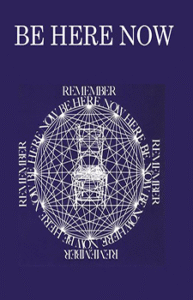
Be Here Now
I was well along on my path when this invitation to infinite Nowness appeared. It was a breath of fresh air: authentic spirituality could be quirky and wacky and artsy and weird. The former Harvard professor and LSD outlaw had brought all his academic and counterculture cred to bear in this part-memoir, part-guidebook, part-quote collection, and part-manifesto, with a section of sideways pages and squiggly line drawings. The only thing square about it was its unconventional shape. Decades later, I asked Ram Dass how he saw his role back in the day. He said he was like an uncle to the young spiritual seekers of my generation. Indeed, reading Be Here Now was like sitting by a fire with an eccentric uncle who was way hipper than your parents and far wiser than you.

Franny & Zooey
Fiction teaches us in different ways than non-fiction, even when the themes are the same. Like most teenagers, I had identified with, and learned life lessons from, Salinger’s most famous character, Holden Caulfield in Catcher in the Rye. The siblings Franny and Zooey Glass were on a higher level, better suited for a neophyte spiritual seeker. I knew they were make-believe, but Salinger’s skill made them seem real, and they made me feel less weird and less alone: other young New Yorkers were also disenchanted by ordinary life and were probing the inner terrain charted by the mystics. They led me to Salinger’s subsequent novellas featuring the deceased oldest Glass sibling, Seymour (See More, get it?) who is portrayed as something of an Everyman saint or Zen master.

The Razor’s Edge
Larry Darrell, the main character of this celebrated 1944 novel—which was twice made into a Hollywood movie—became something of a role model to me early on in my path. A young man of great privilege, he returns from WWI with what we might now call PTSD and a radically transformed perspective. He gives up everything his upper crust world esteems—proper marriage, wealth, easy entrée to a respectable career—to wander in search of greater meaning. I came from a working class family and didn’t have a dime to spare, but I completely identified with Darrell, and when he finds himself a guru (modeled after the venerated Ramana Maharshi) in an Indian ashram, I wanted the same, or at least a reasonable facsimile.
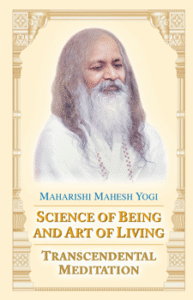
The Science of Being and Art of Living
Like most people in the 60s, I first heard of Maharishi Mahesh Yogi when the Beatles took up his Transcendental Meditation (TM) and then sojourned at his ashram in India—a watershed moment in East-meets-West history. The book is a skillful rendering of India’s profound spiritual wisdom in the English of our rational, pragmatic, scientific era. It was so convincing about the value of deep meditation that I learned TM as quickly as I could. Two and half years later, I became a teacher of the technique, and I still practice it. What I harvested from Maharishi’s book and my subsequent immersion in his orbit was a solid foundation for the long and winding road that followed.

The Perennial Philosophy
This book opened my eyes to the core precept that, taken to their depths, all paths lead to the mountaintop of spiritual enlightenment. As the Vedas put it, “Truth is one, and the wise call it by many names.” Huxley gathered descriptions of profound inner experiences from the mystics in every tradition, spotlighting how similar, if not identical, those luminous moments are despite differences in culture, language, era, and religious background. I hadn’t known there were Christian, Jewish, and Muslim mystics who were very much like the sages of India. I realized then, and know more certainly now, that if religions focused on common experience instead of competing dogmas, the world would be a better and safer place.

The Spectrum of Consciousness
I had majored in psychology because I wanted to understand the human mind. I dropped out of graduate school because I was profoundly disappointed by academia and was finding better answers to life’s Big Questions in the Eastern wisdom traditions. Then, sometime in the mid-70s, I discovered that Wilber had done what I never dreamed possible: integrating the discoveries of modern psychology and the insights of the mystical traditions into a systematic theory of consciousness. The book had a seminal influence on the development of Transpersonal Psychology, adding new levels to what was deemed possible for human development and legitimizing spirituality as an area of study. It showed me that what I was exploring for my personal benefit had much bigger ramifications.
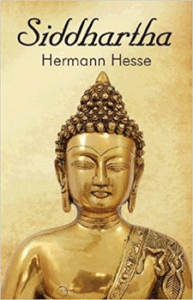
Siddhartha
This novel about a fervent seeker at the time of the historical Buddha combined the satisfying pleasures of a good yarn and the radiant lessons of the Upanishads or a Buddhist treatise. I identified strongly with the main character’s drive to live as an ascetic in search of enlightenment. I also identified with his turn toward the pleasures of the senses and wordly achievement—and with his final choice of simplicity and spiritual wholeness. The book also awakened in me a yearning to go to India. It took me a number of years to get there, but I knew reading Siddhartha that, in some mysterious way, India was my spiritual homeland.

Zen Flesh, Zen Bones
One of the first spiritual books I read, this slim volume—actually four books in one—blew my mind then, and, when I open to a page at random now, still blows my mind. The book consists of pithy Zen stories, puzzling queries (koans), an allegorical description of the stages leading to enlightenment, and 112 concise meditative instructions (actually from the Hindu tradition of Kashmir Shaivism). Something about the book’s Zen sensibility is as infectious and mysterious as a magic show, as surprising and satisfying as a good punch line, and as eye-opening and enticing as the smell of strong coffee in the morning.