
Ancestral memory keeper | Fertile fire gazer | Rooted witch |
Perdita Finn
Perdita Finn is a writer on spiritual topics more interested in ecology than theology, a witch who prefers the fertile darkness over fluorescent enlightenment, and a woodwife married to the stones, the dirt, the mountains and the trees. Her husband keeps her seal skin hidden in the attic.
Her books include Take Back the Magic: Conversations with the Unseen World and Mothers of Magic: Summoning the Wisdom of Our Ancestors. With her husband Clark Strand she is the author of The Way of the Rose: The Radical Path of the Divine Feminine Hidden in the Rosary. She lives in the moss-filled shadows of the Catskills with her blood and soul and fur kin. | takebackthemagic.com
My 10 Best
(In no particular order)
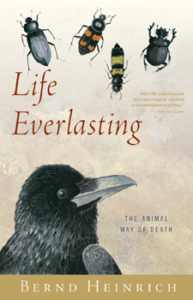
Life Everlasting
Modern civilized human beings mostly treat death as a mistake or a failure rather than an inevitable, generous mercy. But everything dies—and the death and decay of one body is the opportunity for other bodies to come back into the world. Written by a naturalist who spent time watching how animals died and were eaten in the wild, this beautiful earthy journey made me want to go out into the woods and offer my own body at the end to coyotes and vultures, mice and beetles, ferns and fungi. This book transformed my understanding of the teachings of Jesus. “Take, eat, this is my body,” is what every body is saying to every other body at one time or another.
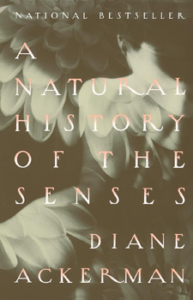
A Natural History of the Senses
A bear can smell five hundred times better than a bloodhound, a deer can see colors beyond the spectrum human beings experience, a bat can literally feel the air around its body. What we call reality, as human beings, is in fact a limited vision based on our very limited sensory experiences. Ackerman dives into the experience of all kinds of animals to try and imagine and empathize with more-than-human ways of knowing. I consider this a foundational book for any animist. No wonder Merlin needed to shapeshift—into deer, salmon, hawks—to bring their wisdom back into the world of men. This book helped me become a shapeshifter and begin the journey to remembering how little I know and remember.
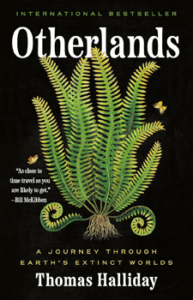
Otherlands
This very serious journey into deep time by a very serious academic is also the most profound example of channeling I have ever experienced. Halliday takes us back and back on a time traveling adventure through geological and ecological cataclysms of all kinds revealing both the contractions and expansions of the natural world in various epochs. But what makes this adventure through life on earth so compelling is how vivid are his depictions of singular moments from earth’s vast history. He revels in the sights and sounds and smells of entirely plants and animals. He takes us with him and lets us be there with him, reminding us that LIFE is always present, LIFE is always finding a way to effloresce, that the bodies of matter may change their expression but there are always new bodies to become. A profoundly sober and hopeful book.
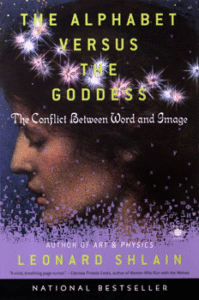
The Alphabet vs the Goddess
Schlain’s diagnosis of horrific bursts of human violence is compelling and essential. He charts a course through history documenting how innovations in communication—phonetic alphabets, the printing press to name two—literally change our brains and instigate episodes of confusion, frustration, and extreme hostility. While Schlain died before the explosion of social media he would have predicted all of the increasing levels of hate, othering, and especially misogyny that the internet has provoked. As a writer, I have had to take a good long look at what his observations mean about my own medium. Am a writer or a storyteller? What would it mean to embrace an oral tradition as opposed to a scriptural one? Perhaps no book has helped me better understand what it means to be a bard.
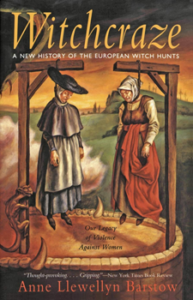
Witchcraze
This book is a must-read that transforms our understanding of the foundations of modernity. The enlightened world we live in was built atop the tortured and burnt bodies of so many many women. Barstow is a meticulous historian who has done work almost no one else has taken the time to document—perusing records, giving names and identities to the victims, and most of all showing that this was not the work of the superstitious but of the educated. The worst violence was committed by the greatest men of learning. Barstow explodes myth after myth and does not force the facts into any one narrow theory but the pattern that emerges is clear. The more rational men became the more they hated women’s bodies. What does it mean when every woman in some villages was sexually tortured and murdered? How is this connected directly to the atrocities in the colonized world? How is the Malleus Maleficarum the ancestor of modern pornography? What does it mean that every European religion participated in this ongoing assault against the female of the species?
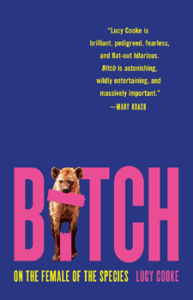
Bitch: On the Female of the Species
A glorious, exuberant, thrilling tour through the erotic life force on this planet. Life always finds a way to make more life—through promiscuity, cloning, and so many different expressions of sexuality and gender. What if human women could reclaim their right to sexual pleasure and desire? How can we become again good bonobos, making love not war? What if we need not be inherently violent? How is the reclamation of desire—rather than the religious embrace of chastity and purity—the earth’s prayer?
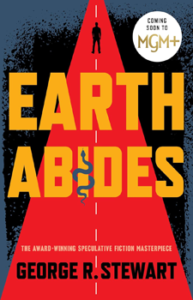
Earth Abides
The first post-apocalyptic novel, written in the late 1940’s, is still the best. Written by a scientist, he envisions a small remnant of humanity after a great plague has passed enduring the strange waves and upheavals of the natural world rebalancing itself. The story follows an educated man who believes it is his responsibility to “pass on” civilization to the children born after the dying times—but finds himself up against a lethargy and a disinterest in all that came before. That lethargy is actually human salvation and ultimately a willingness to stop fighting the earth and submit to its seasons, migrations, and generosity. No one has a go bag or a bunker, eventually the canned goods go bad, but the earth itself revives and flourishes.
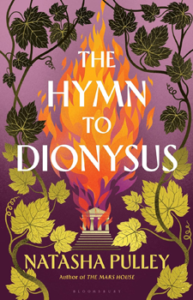
The Hymn to Dionysus
The Bacchae rewritten by a queer woman centered on the point of view of Dionysus. Collapse has never been so ecstatic, terrifying, and beautiful. There are other books on Dionysus—The Immortality Key, the work of Kerenyi—but this book captures the spirit of this ancient god, the power of the vine to take down the buildings, the power of dance to bring down empire. It is so delicious weird, so filled with heart, and while set in an ancient past feels utterly relevant and urgent to the world we live in today.
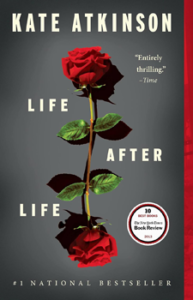
Life After Life, A Novel
What if we had an eternity of lives before us? What if every choice generated a different life but no end to life? This absolutely riveting book follows Ursula, a woman born before the World Wars to a well-off British family through a single life lived hundreds and hundreds of different ways. As she begins claiming her awareness of the long story of her many lifetimes, her purpose through life transforms. What is life really for? Without ever adopting linear notions of progress and evolution, this heart-filled book, wise beyond words, shows us the power of embrace each moment of love we are offered whenever we are offered it.
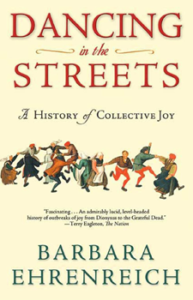
Dancing in the Streets
Performance versus participation is the implicit message in this book that deconstructs so many of our religious institutions. Religion has been so often used as a psychotropic mechanism to keep the congregation obedient and conforming to cultural norms. Revelry, however, is the ancient way of disrupting all of our human notions of order, hierarchy, and power. Feast days involved mask wearing and costumes so peasants could become kings, men become women, and humans become animals. We are other than we know! What if everyone is creating the theater together and there is no audience? What if it is all co-creation? We don’t need to be silent or silence, bowing, sitting, listening—we need to start making music and art, get on our feet, improv and do theater, and dance together again. This is what will heal our collective trauma. This book is the foundation for the Feast Day of Our Lady of Woodstock which happens every year at the shrine my husband and I created. Song, dance, devotional prayer, shared food, under the stars, all free, all welcome, all inclusive. Let us remember again what life is really for.