Hermetic Artist | Author | Alchemist | Surreal-Idealist | Devotee of Hermes |
Marlene Seven Bremner
MARLENE SEVEN BREMNER was born in Frankfurt, Germany in 1983. She has a BA in Geography and Environmental Studies and is trained as a Polarity Therapist by the Institute of Holistic Health Careers. She is a self-taught oil painter, author, poet, and musician, exploring esoteric themes arising from her study and practice of Hermeticism, alchemy, magic, astrology, and mythology. Seven developed her painting career in the Pacific Northwest, showing her work in both group and solo exhibitions along the West Coast and internationally, and now resides in the desert of New Mexico. She is the author of Hermetic Philosophy and Creative Alchemy: The Emerald Tablet, the Corpus Hermeticum, and the Journey Through the Seven Spheres (Inner Traditions, 2022), and The Hermetic Marriage of Art and Alchemy: Imagination, Creativity, and the Great Work (Inner Traditions, 2023).
www.marlenesevenbremner.com

My 10 Best
(In no particular order)
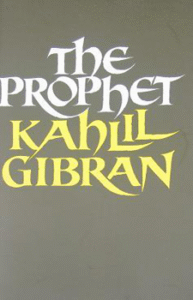
The Prophet
There are spiritual books, and then there are transmissions of divinity so exalted that they transcend the genre altogether. Kahlil Gibran’s The Prophet is one of these divine transmissions. Poetically elegant and refined, there is nothing extraneous here. Just the sublime essence of truth extracted from the infinite and carefully composed in a series of prosaic vignettes, parables, and poetry. As if that weren’t enough to entice the spiritual seeker, the text is accented by Gibran’s ethereal and mystical paintings. This is a book to be returned to again and again for inspiration, insight, and timeless wisdom for the soul.

True Hallucinations
As a teenager I was keenly interested in the exploration of altered states of consciousness. My friends and I would stay up late listening to recorded audio cassette tapes of Terence McKenna, having our minds completely blown. True Hallucinations is the true story of Terence and his brother Dennis and their expedition into the Amazon rainforest. Their mission: to understand the meaning of consciousness. It is an absolutely wild and mind-bendingly strange story, inevitably focusing on some truly harrowing psilocybin trips, and the fine line between psychonautic exploration and madness. What was most remarkable to me was the thought of them setting out on an adventure to understand the meaning of consciousness. This became a defining motivation in my own life and spiritual pursuits from then on.
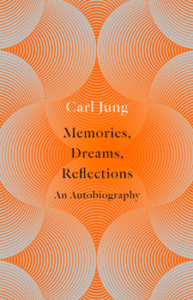
Memories, Dreams, Reflections
I was gifted this book in my mid-twenties after having read some of Jung’s writings on alchemy, including Psychology and Alchemy and Alchemical Studies. While I was absolutely fascinated and inspired by these other academically dense works, Jung’s memoire stirred the depths of my soul and allowed me to connect with him as an individual on a spiritual path. In a way, it was like looking into a mirror, and I’ve never had so many “A-ha!” moments reading a book. For anyone who is navigating the spiritual dimension of life, and all that it entails, this book is a wonderful source of inspiration and a refuge for the weary traveler. And for those who subscribe to Jungian ideology, this book is an absolute must read.

The World Is As You Dream It
Leading into my college years I became deeply enthralled by the wisdom and traditions of Amazonian tribes. One of my geography professors gave me an entire 13-gallon sack full of VHS documentaries about different indigenous tribes of South America, and I remember how impactful it was to immerse myself in this world, even if it was just through a screen. I read as many books about shamanism as I could find and practiced techniques that I learned. Of all the books that I read during this period, John Perkins’ The World is As You Dream It left a deep and lasting impression. What the indigenous peoples of the Amazon and Andes, and many others around the globe, understand is that all things are connected in a cosmic unity. Everything is alive and we are dreaming this world into existence. If we look around, we can see that much of what is being dreamed is in fact a nightmare. This understanding—that by changing the dream, we change our world—was deeply embedded in me through reading Perkins’ book, and since then I have sought to integrate this into my life and the way that I think, act, and dream.
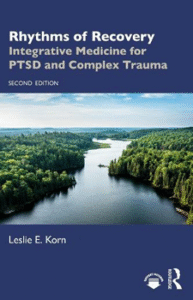
Rhythms of Recovery
I think for many people embarking on the spiritual path, there is a tendency to want to reject the body and to focus on the immaterial aspects of existence. One of the lessons I received early on was that trauma and unprocessed emotions get stored in the body and will find their way to the surface eventually. And the path to self-actualization and gnosis is not through ignoring or denying our physical, animal nature, but by integrating it and bringing it to union with the spiritual dimension of life. Sometimes trauma creates havoc and immense dysregulation of the various systems of the body, requiring holistic approaches to healing that address the body, mind, and soul. I met Leslie Korn in 2008 when I became an intern at the Center for Traditional Medicine, and I began a period of intensive study with her to learn the art of Polarity Therapy. Dr. Korn is a highly skilled and experienced therapist, bodyworker, nutritionist, career coach, and healer, who I’ve had the privilege of knowing and working with for over 15 years. This book, Rhythms of Recovery, was one I assisted with as it was being prepared for publication in its first edition, and again in its new 2nd edition released 2023. It made a huge impact on my spiritual journey at the time and continues to be a trusted resource. Dr. Korn weaves together traditional wisdom, spirituality, myth, and scientific research in a way that is engaging and eye-opening. Reading this book helped me to understand the ways in which trauma had affected me throughout my life, and how to restore balance.

The Secret Teachings of all Ages
At a time in my life when I was deeply immersed in occult and esoteric studies, I was lucky enough to be entrusted to look after a full-size, color-plated, signed copy of Manly P. Hall’s The Secret Teachings of All Ages, which became a prized studio companion. Between painting sessions, I would regularly lose myself in the pages of this enormous tome of ancient wisdom. This book is quite possibly the most beautiful and profoundly impressive compendium of esoteric knowledge that exists, and it belongs on the shelf of any serious initiate into the mysteries. Like opening a door into another world, The Secret Teachings beckons one into the mystical teachings of Ancient Egypt, Hermeticism, Platonic philosophy, Rosicrucianism, Alchemy, Qabalah, mystic Christianity, Pythagoreanism, and nearly every occult teaching you can think of. It’s quite remarkable that Hall wrote this comprehensive study of the world’s esoteric teachings at the young age of 27, which to me suggests that he has spent many lifetimes upon the old, old path.

The Corpus Hermeticum
More than any other spiritual text, the Corpus Hermeticum has been foundational to my path and a continual source of inspiration, wisdom, and revelation. The Corpus Hermeticum is a compilation of seventeen treatises concerning the mystery teachings of Hermes Trismegistus. Written as dialogues between various teachers and disciples, they explore creation and the ordering of the cosmos, the nature of consciousness, the relationship between humanity and God, fate, and other mystical, philosophical, and theological subjects. Hermeticism was and continues to be a very syncretic, inclusive spiritual tradition, rooted in ancient Egyptian and Greek wisdom. It revolves around the conception of a unified reality imbued with consciousness in which all things are interconnected. There are several translations. My personal favorites are Thrice-Greatest Hermes, by G.R.S. Mead, which is a three-volume set that includes not only the Corpus Hermeticum, but nearly the entire body of hermetic writings known as the Hermetica; and the more recent translation by Brian Copenhaver called Hermetica, which includes the Corpus Hermeticum and a well-known Hermetic text called The Asclepius.
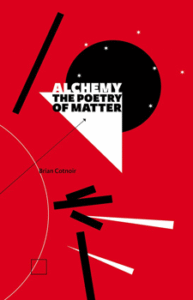
Alchemy: The Poetry of Matter
“The working of wonders is from the one, just as all things come from the one.” This phrase, from Jābir Ibn Hayyān’s version of the Emerald Tablet of Hermes Trismegistus, is the quintessential tenet of the Hermetic and alchemical tradition. In Alchemy: The Poetry of Matter, Brian Cotnoir provides a plethora of translations of the tablet in elegant scripts. There are few contemporary authors who manage to convey the profound spiritual essence of alchemy with such clarity and comprehensive understanding as Cotnoir. In this exquisitely designed book, he exposits the richness of alchemy in its physical, spiritual, medicinal, and artistic complexity in a way that is lucid and comprehensible, while retaining the poetic style of traditional alchemical texts. Replete with illustrations, inspiring quotes, and diagrams, this beautifully type-set book is a must have for anyone interested in the Royal Art of alchemy.

The Penguin Dictionary of Symbols
As an artist, poet, author, and songwriter, I live for symbols. The Dictionary of Symbols by Chevalier and Gheerbrant is by far the most comprehensive, well-researched, and beautifully written book on symbols that I’ve come across. There are no pictures, just a wealth of symbols and a rich passage for each one that will stimulate the imagination and feed the inner world. I think this may be my most heavily referenced book, and one that I have come to cherish.

Alchemy: The Medieval Alchemists and their Royal Art
Reading about alchemy has been one of the most potent catalysts for spiritual understanding and growth in my life. One of my favorite books about the subject is this contemporary work from 1976 by Johannes Fabricius. I have yet to come across another with such a complete survey of alchemical illustrations accompanied by such rich and evocative text. While it is a very psychological analysis of the Great Work, referencing Freud, Jung, and Silberer, it is written in such a poetic and alchemical manner that it has a similar effect to that of reading old alchemical manuscripts. As though written in divine cypher, alchemical writing awakens the symbolic gateways of the soul while feeding and nourishing the unconscious. What is awakened may not be immediately recognized, but reveals itself over time. While this style of writing has been termed “gibberish” after Geber, the Latinized name of the alchemist Jābir ibn Hayyān, it has a powerful effect on the psyche of the reader. Not to say that this book is by any means unintelligible—it is articulate, cogent, and beautiful. But it doesn’t lend itself to a simple rational understanding or a one-time read. This is a book that I return to again and again, always finding something new to activate my imagination and help me understand the alchemy of my current experience.