
Adventurer | Author | Psychic Medium | Professor | Attorney | Historian | Humanitarian | Conservationist | Humorist |
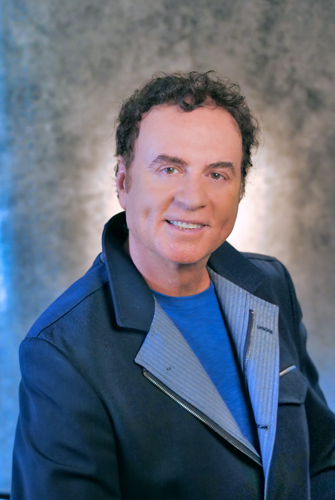
Mark Anthony
Mark Anthony, JD Psychic Explorer® (aka The Psychic Lawyer) is a fourth generation psychic medium who communicates with spirits. He is an Oxford educated attorney licensed to practice law in Florida, Washington D.C., and before the United States Supreme Court. Mark travels to mystical locations in remote corners of the world to examine Ancient Mysteries and Supernatural Phenomena.
Mark appears nationwide on TV & Radio including CBS TV “The Doctors,” and Gaia TV’s “Beyond Belief with George Noory.” He is the co-host of the live stream show “The Psychic and The Doc,” on the Transformation Network, and a headline speaker at conventions, expos and spiritual organizations such as the Edgar Cayce A.R.E., International Association of Near-death Studies, Vail Symposium & universities including Brown, Columbia, Harvard & Yale.
Mark Anthony is also a columnist for Best Holistic Life Magazine and the author of The Afterlife Frequency, Letting Go, and Evidence of Eternity.
www.AfterlifeFrequency.com
My 10 Best
(In no particular order)
The Source
While fictiona,l this book is filled with historical facts. Michener had a gift for getting the reader to see the story through the eyes of the characters. It is about an archaeological dig in Israel and the team of archaeologists discovers an object on different levels. Each level came from a different era in history, and then we’re transported to the people who were connected to that artifact. I was in my late twenties when I was guided to this book. For me it was like historical psychometry because from that object we learn not only about the time period but also about the development of the concept of God and how religion has evolved through the ages.
Myths to Live By
This book examines the importance of myths and stories of supernatural entities and how they are a potent force in our lives. I was in my late teens and fascinated with the study of philosophy. This book helped me to understand the metaphors contained in the stories of belief systems from ancient to modern times. This is also a very useful tool in understanding our own beliefs and that instead of taking these stories as literal to understand they are teaching tools. For example, Jesus often taught through the use of parables. He told stories to illustrate the life lessons he was communicating. Joseph Campbell does an excellent job at showing how what many consider to be myths are actual powerful teaching tools through the use of metaphor.
Life After Life
For centuries there have been accounts of people who died and then came back to life with tales of being transported to another realm where they encountered the spirits of deceased loved ones as well as a brilliant white light filled with intelligence and love. This energy is the divine power we call God. These resurrections baffled both spiritual leaders and medical professionals. That is, until Dr. Raymond Moody applied the scientific method of objective observation to this phenomenon. After investigating over 100 case studies he developed the term “Near-death Experience” (NDE). Having had an NDE as a toddler, this book certainly resonated with me. It also shaped my belief that there is a bridge between faith and science and that the divine power we call God is so much greater than anything dogmatic belief systems teach.
The Forever Angels
This book helped me to understand the ramifications of my Near-Death Experience which occurred when I was four years old. All too often, NDEs of children are discounted or the child is told not to “worry about it.” Yet, despite that, the impact of such a potent spiritual experience can take years to understand. As an adult I don’t mind being “different” but it isn’t easy to be different when you’re a child. This book helped me reflect upon my unusual childhood as both an NDEr and a medium.
The Lord of the Rings
As a child, I was always a prodigious reader and this led me to The Lord of the Rings, which may well be the greatest work of literature of the 20th Century, and for good reason. Certainly ,we’ve all come to know it through the movies and pop culture, but for me LOTR was a lot more than that. An Oxford don, Tolkien was a linguistics genius with a tremendous background in Norse mythology. This work can also be examined on several levels. On the surface it is a fantasy adventure with plenty of dramatic battles and the classic good-triumphs-over-evil theme. Yet beyond that, it goes deep into our psyche with several themes about how the test of one’s character comes not from our physical bearing but our inner strength. It is also a coming of age story—how the hobbits represent us as children, carefree, innocent and free of worries. When they see elves, who personify both magic and the ideal of earth-bound angels leaving Middle Earth permanently, this is symbolic of our transition from childhood to adolescence. As Santa Clause, Easter Bunny, and other childhood fantasies fade from our lives we must now be responsible for our own destiny. That destiny can lead us down dangerous paths, like the obsession with the “ring of power.” The ring symbolizes addictive behaviors which we think we can control, but which ultimately control us unless we possess the inner strength to transcend the addiction.
Siddhartha
This is a novel about a young man who evolves into the person we know as Buddha. What I love about this book is that the spiritual journey of Siddhartha is one which challenges the reader to question what Siddhartha questions. Can religions actually explain the mystery of what we call life? Siddhartha was a Hindu prince who immersed himself in various aspects of that faith before moving beyond it to another path of spirituality, free of the excessive dogma of classical Hinduism. I was seventeen years old, and while my friends were having fun being teenagers, I had started college early and then my mother almost died to several medical issues. In the span of three months I had to go from being a teenager to running a household, caring for an ill parent and attending college. In short, I had to grow up really fast—that is when I discovered Siddhartha. This book helped me understand how life is suffering but this suffering is part of the spiritual journey. It helped me to understand how suffering is essential to our spiritual journey for we grow in response to adversity. Think about it—if life were always easy would there ever be any motivation to evolve?
Byzantium
Byzantium is a trilogy about the Byzantine Empire. I’ve always believed in reincarnation, and when I was in my early 30s I began studying it in depth. This is why I believe I’ve always resonated with the Byzantine Empire. Not only was this empire important to the development of Western Civilization after the collapse of the Western Roman Empire, it was also the most mystical Christian civilization to have ever existed. Norwich is a great writer who brings to life a subject that is virtually unknown to most Americans. While reading these books I feel as if I’m in a history class at Oxford being taught by John Cleese of Monty Python fame. These books chronicle the struggles of a civilization constantly under enemy attack and despite that, it managed to excel in cultural and religious achievements. This was a world where the spirits of Jesus, Mary, and angels were not some far off, distant entities but with us constantly and part of our daily lives. It also illuminates how important it is for us to separate Church and State, a line in the modern era which is becoming alarmingly less distinct.
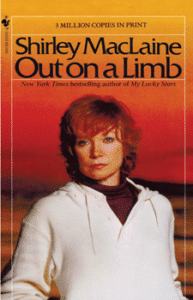
Out on a Limb
This book was instrumental to me when I was trying to balance being a psychic medium with my life as an attorney. This resonated with me because when a major movie star went public with her spiritual beliefs, which included reincarnation, she was subjected to all sorts of ridicule from the media. Yet Shirley didn’t let any of that dissuade her from her path. The book chronicles Shirley’s spiritual journey which took her around the world examining different belief systems in places such as Peru and India. This included the spiritual journey within. My mother who was a gifted psychic medium met Shirley during the promotion tour for Out on a Limb. Mom even conducted a reading for Shirley. A few years ago, I had the honor of being interviewed by Shirley for her radio show “Independent Expressions.” Like my mother, I also had the pleasure of conducting a reading for Shirley MacLaine, which involved communication with the spirits of Marilyn Monroe and Elizabeth Taylor. (Not sure I’ll be able to top that one…LOL).
Holy Bible
As someone who has spent a lifetime studying belief systems and the concept of God, the Bible has been an essential part of my journey. With the exception of the Qur’an, no other written work has caused so much controversy throughout human history. My approach to the Bible is metaphorical instead of literal. Sir Isaac Newton who invented calculus and for that matter the science we know as physics spent more time studying the Bible seeking hidden messages than he did studying science. As a researcher in the field of spirituality I have examined many passages that appear to be descriptions of NDEs, reincarnation, not to mention what we now refer to as psychic and mediumistic abilities. In light of the continuing examination of the Dead Sea Scrolls, it is clear that understanding this enigmatic work will be ongoing for generation to come.
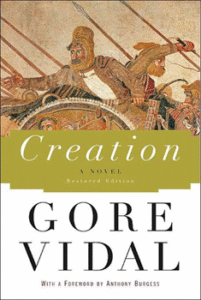
Creation
This book had a profound impact upon me as a teenager, but also as a writer and a student of history, philosophy and theology. It is the memoir of a fictional character, Spitama, who served as the Persian Empire’s ambassador prior to the era of Alexander the Great. The character is also a Zoroastrian priest who is the grandson of Zoroaster. This religion centers on belief of Ahura Mazdah the “Wise Lord” of light who wages an eternal struggle against a dark entity known as Amesha Spentas. This book is a crash course in 5th Century B.C. spirituality as during the story, the reader encounters Buddha, Confucius, Herodotus, Pericles, Sophocles, Aristotle, and the Great Kings of Persia, Darius I and his son Xerxes the Great. He does take a stab at Egypt as a land filled with religious fanatics. Vidal uses metaphor with the religions of the ancient world as a commentary on how to this day, religion is used by unscrupulous political leaders as a form of control by inducing shame, guilt and fear and that true spiritual teachings are about truth, love, peace and enlightenment.