
Creative Rebel | Flow addict | Chocolate lover | Proponent of Fierce Love | Incurable romantic |
Eleanor O’Rourke
ELEANOR O’ROURKE began her career as a road manager in the music business. Working with a team of creative people gave her an insight into the way creative energy works. When it flows well there is synchronicity, brilliance and even genius. When it doesn’t flow, there is stress, drama and burn out. She then went on to run a successful marketing company, doing product launches and sales promotion for corporate clients.
As a result of her experiences, she is now passionate about awakening people to their own creative spirit, while at the same time debunking many of the old concepts around creativity – e.g., that it is an exclusive gift available to a few special individuals, or that it only applies to a narrow niche of career such as advertising, media or interior design.
Eleanor has over 30 ears experience in a variety of modalities including NLP, Psychology of Vision and is a certified archetype consultant trained by Caroline Myss. She is the author of four books on various aspects of the creative process: 40 Days 40 Nights – One Woman’s Quest to Reclaim her Creative Mojo, Breakdown – A Rebel’s Take on Depression, The Freedom Project – How to Find Contentment in a Crazy World, and Flow Without the F*ckery – Wake Up Your Killer Creativity.
www.EleanorORourke.com

My 10 Best
(In no particular order)
Tap a book cover to read her thoughts about the book.
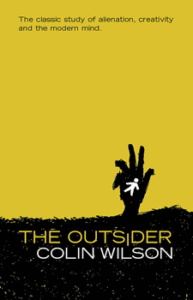
The Outsider
As a child I always felt like an outsider. Some part of me couldn’t find expression, which left me constantly at odds with myself. I longed for something I couldn’t name or articulate. Instead of clarifying my desires, I was just rebelling against what I didn’t want. My desires felt conflicted. I wanted to disconnect and I wanted to belong – but not to the world I found myself in. This book helped me recognise myself between the pages… which gave me some comfort. It led me onto reading books by Hermann Hesse and Jean Paul Sartre, so it started me off on the long spiritual journey towards self-knowledges.

Electric Kool-Aid Acid Test
For me this book brought liberation from my angst-ridden mind – an introduction to the hippy counter-culture. It represented freedom from traditional values and liberation from the obedient Catholic world I grew up in. It describes the psychedelic experiences of Ken Kesey and his group of followers who called themselves the Merry Pranksters (what’s not to love?!) as they travelled across America in a brightly painted school bus. This led me onto the writing of Jack Kerouac, the poetry of Allen Ginsberg and the music of Grateful Dead and the philosophy of Timothy Leary and Alan Watts. Eventually of course the drugs took their toll on the Pranksters, everything fell apart, and it became obvious that there are no short cuts to transcendence!

The Structure of Magic
This was my first introduction to N.L.P. and psychology. It appealed because it had magic in the title, but really the mind is so extraordinary that it can seem magical. Making things appear or disappear was brought about by the nocebo or placebo effect and relabelled science. If we change our minds we can change our world. Phobias, negative moods and fears can all be vanquished in minutes. This book brought me hope and optimism… that everything can be healed with a different mindset. Unfortunately, though the principles were sound, not many people were getting healed! This led me in the direction of a far more powerful instrument of healing – the heart.

If it hurts, it isn’t Love
This book introduced me to the mind blowing concept of the difference between Love and Need. Most of our concepts of love in the western world are all about needs, or more specifically the pain that comes when our needs are not met. Most of our romantic books, poems, movies and love songs are about needs rather than love. We talk about the pain of heartbreak, but love doesn’t hurt. It’s our needs that hurt. It’s a small idea, but a huge concept when we are really honest about our relationship to our emotions. Sadness is our desire to cling to the past; jealousy our fear of losing; anger our need to control in order to avoid rejection. It completely changed my definition of what love is (and prepared the way for Brene Brown)

A Return to Love
My foray into the heart led me to A Course in Miracles, an incredible psycho-spiritual book channeled by ‘Helen Schucman, but it felt too impenetrable to read. Luckily Marianne who herself was a student of the course wrote a wonderful summary in this book. She writes openly about her inner demons and the breakdown that led to her life changing surrender into the divine. Having by now become aware of how crafty the ego is (it “loves” the spiritual journey – often so much that it doesn’t actually want to be healed!) I really resonated with this. A redefined relationship with the Holy Spirit brings true freedom, rather than the adrenaline fuelled freedom I’d come to associate with independence. I realised that a lot of my search for spirituality was my ego’s attempts to get high, which was more about superiority and specialness than true surrender.
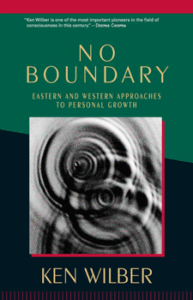
No Boundary
Ken Wilbur has one of the most brilliant minds which is an advantage if you’re going to tackle a subject like the nature of consciousness. There are numerous books on transpersonal psychology but Ken has an ability to make the most impenetrable concepts understandable. This is where I was first introduced to the concept of non duality, which led to all sorts of books on mysticism and the true nature of reality. It also made me think deeply about the nature of boundaries and how difficult it is to get it “just right” – too much boundary and we’re rigid and unteachable, too little and we fall into projection and shadow. It’s a bit of a tightrope between our self and “other” but if we can walk it, this allows us access to the present moment and the sensation of “oneness”.

Eastern Body Western Mind
Having moved my interest from psychological to the spiritual and energetic, I read a lot of books about Chakras, but for me Anodea Judith reigns supreme in this area. This is a phenomenal book covering all aspects of the chakra system. Each energy centre is looked at from a spiritual perspective and from a child developmental perspective. This grounds the information in a really practical way and is invaluable for looking at the root cause in things like co-dependency, addiction, fears, traumas, belief systems and metaphysics. It’s a perfect blend of science and spirituality. It also brings in Jungian psychology, so provided the perfect stepping stone to where I went next – the world of archetypes.

Sacred Contracts
It was hard to choose between this, Anatomy of the Spirit and Why People Don’t Heal, as they’re all fantastic, but the most transformational was Sacred Contracts. In this book Caroline maps out all the archetypal patterns that lurk in our unconscious mind. Some we’re conscious of and like to hone into a personality, others we project out or repress in the shadows. The book has an appendix at the back listing fictional characters in stories and movies, by which we can start to identify the various archetypes at play. This is a fun way of identifying and understanding the behaviour tropes in ourselves and others, leaving us no place to hide – a precursor to radical honesty and authenticity. It helps us answer the important questions “who am I?” and “what am I here to do” (in other words what is my sacred contract?)
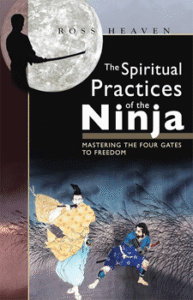
The Spiritual Practices of the Ninja
As we pursue expanded consciousness, it’s easy to lose track of the fact that spirituality is a practice rather than a conversation or an intellectual study. The more conscious we become, the more power we have access to, but this has a built in safety mechanism. We need to be able to manage that power. Shamans have always been aware of this which is why they have developed rigorous practices. Ross Heaven describes these practices as initiations. We must clarify our vision, confront fear, find true power and overcome the soul fatigue that is at the root of so many of our personal and social problems. In this way we take our power back from places we have invested it unwisely. Ross has a skill of making discipline aspirational rather than arduous!
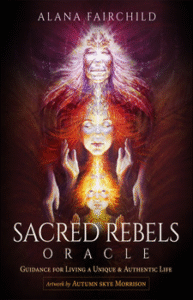
Sacred Rebels Oracle Deck
It’s easy to be inspired by a book and then forget all about it. Our world is very noisy and new content is everywhere competing for our attention. For this reason it’s a great idea to do a daily meditation with a deck of cards, each with some words of wisdom to reflect on, a lesson, mantra, or healing practice. It doesn’t take a lot of time or effort so can become one of the good habits incorporated effortlessly into a morning routine. I love Alana Fairchild’s writing and find this deck both creative and uplifting. It’s interesting how the cards develop their own consciousness so the more you work with them the more co-creative the process becomes. I’m always astonished by the synchronicity in the messages. I love the title as it reminds me of the circular nature of healing – from rebel without a cause as a feisty teenager to sacred rebel with a desire to bring more creativity, humour, flow and joy to a world that is hungry for love.