Old Soul | Deep Feeler | Wisdom Keeper | Spiritual Rebel | Equal Parts Sacred and Silly |
Diantha Rose
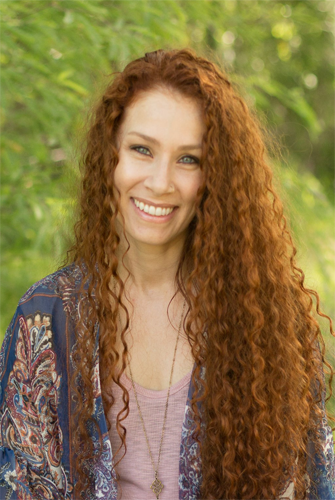
DIANTHA ROSE is a spiritual life coach, medium, and author who blends intuitive insight with practical guidance, helping people realign with who they truly are and create lives rooted in meaning and authenticity.
For over two decades, she has channeled guidance that meets people at the soul level, walking beside them through grief, transformation, and the courageous process of becoming whole again.
Her approach is intuitive, grounded, and deeply human. She doesn’t teach fixing; she guides remembering. More than titles, what defines her is presence. She carries a rare gift—the ability to make people feel seen, understood, and at home in their own skin, whether she’s guiding a room of seekers, writing something soulful, or speaking truth about what it means to be human.
www.diantharose.com
My 10 Best
(In no particular order)
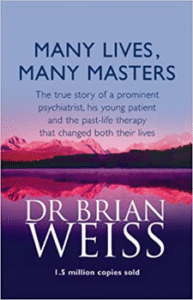
Many Lives, Many Masters
Many Lives, Many Masters was the very first book on spirituality I had read. I was around 11 or 12 years old and it was newly published. My mom had purchased it and offered it to me to read. She thought it might be beneficial in helping me understand the past life recalls I was having along with all the other things I was experiencing (beings from another space, memory of soul contracts, the patterns I saw among other things). This book brought not only validation but comfort. I was very different from everyone around me as a child and it was obvious to myself as well as others. This story made me feel more like my Self and less like a freak although I longed desperately to belong. It offered a form of Self-acceptance even if I couldn’t fully embody it at this age. It assured me that the stories I recalled and the conversations I had were not some symptoms of mental illness as I began to fear but something much more profound.
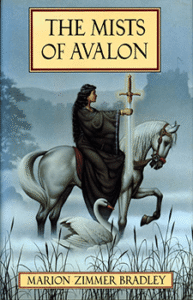
The Mists of Avalon
This one might be funny because it is fantasy, but it was a story that I felt such a connection with. I felt as though I lived it. When I read about the challenge of Morgaine and the priestesses of the Isle of Avalon, so much came to life in me, like a spark or life force magic I already had access to. I was probably 13 or 14 when I read this one. Parts were probably a bit too adult for that age, but that wasn’t what stood out to me. It was the way of life and connectedness. And how power, pure source power, could become corrupt and manipulative. That feeling I had always carried, that my own power of voice, thought, and word scared me, began to make sense. Having access to the kind of information and source power that I seemed to have came with incredible responsibility, and I began to understand the dilemma of using it. How could you be sure you wouldn’t get lost in it, or corrupted by it? Even at that young age, I felt that my words carried a sort of spell and that I needed to be careful with what I spoke. This book helped me understand the gravity of losing touch with your Self.
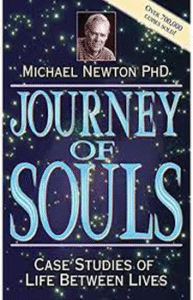
Journey of Souls
I read this book for the first time around 15 years old or so. It had just been published then. It was the first book I read where I felt lightbulbs going off in so many ways, connecting to information I already knew but didn’t have proof of. It meant so much to me as someone who already carried an understanding of pre-life design and stories, along with other wild encounters with beings not of this planet, all stored somewhere in my awareness. I felt validated in so many ways. It was the first book I ever read in the realm of spirituality and the before-and-after life that truly resonated. It was incredibly profound to see that a man, a professional, had made this discovery and was bold enough to write about it. It made me feel a little less crazy about who I was. This is still a book I recommend to my clients who are just beginning to question who we are and where we come from. It’s still a great introduction to a deeper understanding.

Voices From the Womb
I read this book right after I finished Journey of Souls. This one was spectacular in the way that it again affirmed a pre-life consciousness. It was like a securing of the idea that we are affected by the human experience even before we arrive. This book did a bit of a number on me after that affirmation, reinforcing how we acquire pain and trauma pre-birth. I had personal experiences, like a pregnancy from a forced encounter at 17 years old that ultimately led me to end that pregnancy, and the conception of my second or third child depending on your view, at 22, that (at the time) I wished had not happened. I had a lot of internal torment and pain to overcome for the torment and pain I felt I was causing these little beings who had not yet fully arrived. I even see it in my son today. He’s 26 years old now, and I watched him spend his early life feeling rejected and unwanted. I knew where that mark had come from. I believe he is reconciling those feelings, but I certainly had a different awareness around them, one that only made sense through what he might have felt pre-birth, because in this realm he was loved by his mother as wholly and completely as any mother could give.
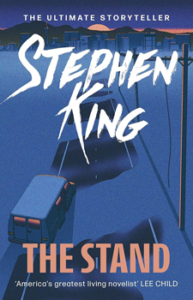
The Stand
Here is another fictional story, but one that was a perfect representation of what I saw in the world: two sides fighting for dominance, always in battle, until one day they meet at some breaking point to determine which side will rule. I was 16 when I read this book and connected with its symbolism very deeply. I was in my own personal stand between light and darkness, having endured an incredibly violent and cruel childhood. I had just attempted an escape from my dysfunctional home environment by running away in the middle of the night. Hours later I was found, and my punishment was to be locked in my bedroom for months. I read The Stand during this unfortunate lock-up, and it was as though the story was happening within me. I was drowning in darkness, and the shadow was loud. It felt taunting. My visions became horrific and vivid, and when I began reading The Stand, I could see the method of the shadow. I began to understand that there are two frequencies everything stems from on Earth: love or fear. I realized that what I offered was pure, unadulterated, unconditional love, and that the darkness could not risk me being so full of it. I connected with the idea that I was born into darkness, and that the shadow was desperately trying to keep hold, making sure I stayed imprisoned, unable to show up on the side of love. This may have been very real or something I constructed internally while reading this book. Either way, it helped me survive adolescence with the belief that I could not succumb, that fear would not win and darkness would not steal my light. There were two parts that struck me in regards to this story. The first was how I was living my own personal “hell,” unable to escape, feeling as though darkness had the better of me. The second was the way it reflected the visions I had seen for humanity. At only 8 or 9 years old, I began having visions of war among neighbors, military in our neighborhoods, empty streets, cars abandoned on the sides of roads. I wasn’t sure it was real. It felt real, as though I had traveled to that moment in time, experienced it, and then came back into the timeline I was operating from. It was incredibly visceral. Yet I had also seen movies like The Terminator, so a part of me wondered if I was blending movie and vision and getting confused. I always saw patterns and energy, though, so the way Stephen King wrote The Stand showed me that his creative thought was channeling the same undercurrents of what was going on energetically. Whether he knew it or not, he saw the point where it all came to a head. This book left quite the mark, as you can probably tell.

The Seven Spiritual Laws of Success for Parents
I came across this book in a used bookstore at 19 while pregnant with my first child. Something about the fact that it was written by Deepak Chopra, who I had heard about during my childhood as someone of deep spiritual nature, and the fact that it was designed for parents, compelled me to purchase it. I remember thinking at times while reading it, “duh, why do we need a handbook? It’s not that complicated.” But I also understood that not everyone sees the root cause of their behaviors or realizes how they project their trauma onto their children, the only beings who truly cannot escape them. I thought I’d better really read into this, so I didn’t repeat what was done to me. In truth, what I learned from this book was that children are the greatest teachers. If we listen to them before we condition and corrupt their innocence, they will alter us. The unadulterated child is the greatest alchemist. The Seven Laws began to speak to me as something to remember rather than something to abide by. And I realized this book wasn’t just about parenting; it was a simple life manual with seven universal laws we could all follow, parent or not. It occurred to me, at some point after reading this, that we are all parenting a child: the child within.

Spiritual Midwifery
I read this book during my second pregnancy and boy do I wish I had discovered it during my first. There are some super hippie things within it that may make some people cringe, but what I gained from this book overall was the beauty and power of being a woman. I don’t mean beauty in the vanity sense, but in the way that women, just in their construction, are beautiful. The fact that we are a portal to Earth, a vessel to bring forth all the new beings looking to experience this journey here, felt magical. It took the fear of pregnancy and the fear of birth out of my mind. It reminded me that what a woman experiences is not something she must endure, but something she chose as a contribution to humanity. This book also began a sense of healing between myself and my own mother. We weren’t going to be resolved for many years to come, but I began to release the idea of what I felt she owed me as her child and started to understand the gift she gave in her offering as the vessel for my life to exist. This was the seed that was planted, and full understanding would bloom 13 years later. I realized that, in truth, she gave me all she could give, and if she could have given more, she would have. It was no longer about me. It was all about her. And there was so much peace in that understanding. I couldn’t tell you today all the details of the book, but I know the women sharing their birth stories so openly had an impact on my view of pregnancy and birth. I remember thinking I wished all women spoke this openly, in a way that showed its beauty and power rather than something we feared or felt embarrassed by.
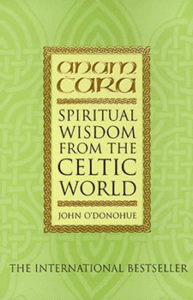
Anam Cara
I think I was originally drawn to Anam Cara because of my own Celtic descent. I read this book somewhere in my early 20’s, likely during my second pregnancy when I was seeking a deeper understanding to my own knowledge of life and its processes. This was another used bookstore find. I didn’t know what I was going to discover in this book, but it was beautiful in its delivery, poetic and lyrical. A way that I personally viewed life despite my circumstances. In retrospect the finding of this book may have been preparing me for a loss I was about to endure. A reinforcement of what I knew to be a soul’s plan and the web we weave toward fulfillment. I didn’t know it at the time of my first read through but shortly after I was going to lose my younger brother, my best friend. I had already lost friends years before. Two very close friends in the same car accident. I knew that the soul was eternal and death was not the end of us because I had experienced encounters with my friends as ‘ghosts’ as well as many other ghosts throughout my life. But the way Anam Cara spoke about the cycle of life as a beautiful orchestration of the web of life and the journey of the soul brought a softening to the experience of loss. Even I, who could see and converse with those departed, still felt the pain of their not being with me on Earth. Reading this book again, after my brother’s death as well as quite a loud wake up call from him from the other side, helped bring back some of the beauty of the cycle of life with all of its circumstances.
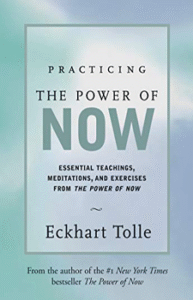
The Power of Now
I read this somewhere in my mid-30s. I was working nights in the hospital and, on occasion, had downtime and was looking for something new to read. I came across this book in a patient’s room and was struck by the title. It was as though it woke up a sleeping part of me that had forgotten something so simple. In my early life, I understood how the current moment was everything, but over time I found myself lost in what my focus was. I would initiate something new from intuition or instinct and then lose sight of what to do next, waiting for the next problem to intuitively solve rather than initiating from the power of presence. At some point, that had been lost to survival. I caught myself worrying over overdrawn bank accounts and what challenge we would have to face next, wondering if we would ever rise out of this. I was working from a space ahead rather than from the moment, so I know why this book title caught my attention. Reading this book reinforced something deep within that had been buried by years of heartache and loss. In all my suffering, I lost sight of who was at the wheel. I forgot that wanting and wishing, then doing nothing and feeling helpless, led to autopilot. And when no one was piloting the ship or driving the car, there was no intention of creating only a hope of not being a victim of fate. This book reminded me that there are too many possibilities that live in the mind and that the only way to know is to try. The only moment that has any power in your life is the current moment. Any time you make decisions from the past or from what tomorrow might bring, you are making decisions from speculation. I began to recognize that all roads of possibility are already paved, but if we are not choosing each step from the moment of now, we are wandering aimlessly, unable to make corrections as needed, hoping we land where we intended to go. This was the very thing that led us to believe we are fated for something or that it will always be as it is. That was the loop.

Waking Up
Sam Harris caught my attention when my husband introduced me to him in some of his talks and debates on YouTube. He saw this man speak of the constraints of religion and how it affected people’s ability to truly connect and felt he spoke very much like me. After the introduction to Sam Harris, I read Waking Up. It was perfect timing as always. My spiritual guidance business had grown exponentially, and I was sitting with people of all kinds of religions and doctrine. Many asking my belief in what God was. I found myself needing to be brave in my statements while not removing the part of faith that kept someone safe. I saw what had happened in some of the Spirituality circles from the late 80’s and onward and saw in many ways that Spirituality was in many ways becoming another religion with rules and doctrines to follow. Sam Harris, being a neuroscientist who spoke like me, who did not have science to back her nor education from Earth in terms of degrees and certifications, helped me feel value and confidence in sharing my knowledge. If science, as it had been doing time and again, continued to prove and explain consciousness in this way, there was value in what I was teaching. I teach from the heart, and the core of my Self is where my wisdom stems from, so when Truth is echoed in spaces that hold high regard, it reinforces what I do. Sam Harris and his way of understanding human consciousness helped me solidify my knowing.