

Cosmic Adventurer | Motorcyclist (2003 BMW Roadster) | Guitarist | Family man | Movie Lover | Handyman – good with tools |
Chris Bache
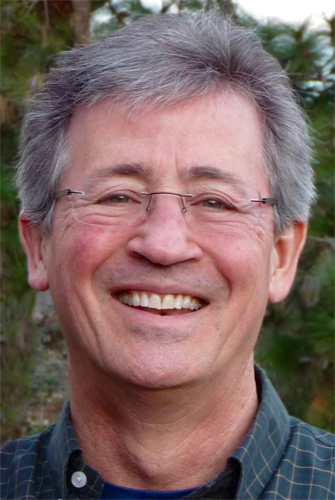
CHRISTOPHER M. BACHE, Ph.D., is professor emeritus in the Department of Philosophy and Religious Studies at Youngstown State University where he taught for 33 years. A Fellow at the Institute of Noetic Sciences, he is also adjunct faculty at the California Institute of Integral Studies and on the advisory board for Grof Transpersonal Training and the Grof Foundation. An award-winning teacher and international speaker, he is the author of 3 books, including Lifecycles: Reincarnation and the Web of Life, Dark Night, Early Dawn: Steps to a Deep Ecology of Mind and the groundbreaking LSD and the Mind of the Universe: Diamonds from Heaven.
https://chrisbache.com
My 10 Best
(In no particular order)
Tap a book cover to read his thoughts about the book.
Realms of the Human Unconscious
I had just finished graduate school in 1978 when this book by Stanislav Grof changed the course of my life. Grof went on to publish many important books on psychedelics (such as LSD Psychotherapy, The Cosmic Game, and The Way of the Psychonaut), but for me this is the book that opened the door to the rigorous and responsible use of psychedelics to heal the wounds of the personal psyche and from there to enter dimensions of consciousness far beyond personal consciousness. Realms of the Human Unconscious marks a turning point in Western thought, not only because of the extraordinary experiences Grof catalogues here but also for the methodology he introduces. Everything I have written since 1980 has flowed from my psychedelic work, and thus can be traced back to the influence of this seminal book.

Twenty Cases Suggestive of Reincarnation
In 1978, I also found this extraordinarily well researched book on children who remember their former lives. In one reading, Stevenson convinced me that reincarnation was a simple fact of life, and this triggered a revolution in my thinking. Reincarnation had never been taken seriously in the philosophical and intellectual traditions I had studied in graduate school, and this book forced me to erase my entire intellectual blackboard and start from scratch, rethinking my core philosophical assumptions. Many other fine books by Stevenson and other researchers on reincarnation followed, such as Jim Tucker’s easier to read Life before Life, but Twenty Cases marks a watershed in the West’s critical encounter with the concept of rebirth. It does not answer all our questions about reincarnation, but it begins a new conversation about the deeper logic of our lives. My first book, Lifecycles (1990), was my response to Stevenson’s pioneering work.
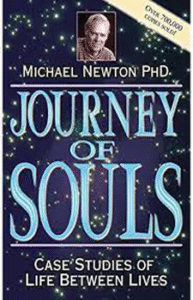
Journey of Souls
After I had written Lifecycles and digested many books on reincarnation and past-lives therapy, I encountered Michael Newton’s groundbreaking book Journey of Souls (1994). Together with his Destiny of Souls (2000), this book took past-life therapy to a new level, exploring our memories of what happens in-between our physical incarnations. Newton’s work gave birth to a new therapeutic movement – “life between lives” hypnotherapy. Based on hundreds of case histories, Newton’s description of our post-mortem existence is compelling and contains many important and thought-provoking insights. His account is consistent with my psychedelic experience, while presenting a more detailed description of what happens to us when we die. I have returned to it frequently through the years and am always nourished by it.

Lessons from the Light
Kenneth Ring has written many excellent books on near-death experiences, but when I am recommending his work to others, I point people to this one. Lessons from the Light (2006) represents his distillation of decades of meticulous research into NDEs. The entire spectrum of near-death experiences is covered here, from “local” NDEs that can be empirically verified to “transcendental” NDEs that reach far beyond spacetime reality, from NDEs in the blind to life reviews so powerful they change people’s lives. I am especially fond of Chapter 13, “Return to the Source,” where Ring collects exceptionally deep NDEs. This book is intellectually satisfying and spiritually nourishing.
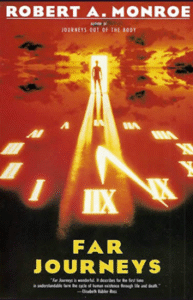
Far Journeys
I was on my first sabbatical in 1985 writing Lifecycles when Robert Monroe’s autobiographical book Far Journeys was released. I read it and was immediately absorbed. Monroe’s quirky and candid writing style had the ring of authenticity about it, so I immediately signed up for a week-long intensive at the Monroe Institute to meet Bob and work with his hemi-sync technology. Far Journeys presents a vision of non-physical reality distilled from decades of Monroe going out of his body on almost a daily basis. Written 15 years after Journeys out of the Body, it presents a much deeper cosmological vision, reflecting the self-clarifying effect of repeatedly entering the out of body state. (This is exactly what we expect in a participatory model of spiritual experience.) At a time when I was working hard to comprehend my psychedelic experiences, Monroe was a spiritual ally. Like me, he was an explorer of the cosmos – different methodologies but the same cosmos being revealed. I don’t think his work gets the attention it deserves from the consciousness community, which is why I included a chapter on it in my book Dark Night, Early Dawn where I compare his cosmology with the cosmology that emerges from psychedelic states.

Choosing Earth
Few people have thought as long and hard on the challenging period of history we are entering as Duane Elgin. From his first book Voluntary Simplicity (1981) to The Living Universe (2009), Elgin has looked deeply into the beliefs that have estranged us from our planetary home and led to its decimation. Choosing Earth (2020) is the culmination of his life-long investigations. In it he presents a scientifically grounded, decade-by-decade account of our deepening planetary crisis and the actions we must take if we are to survive this catastrophe. We either grow-up as a species or we die. Elgin is one of the great visionaries of our evolutionary transformation, and his work is deeply compatible with my visionary experience of the birth of the Future Human.

A New Science of Life
When I was trying to understand the collective ordeals that were showing up in what at the time I thought were my “private” psychedelic sessions (Dark Night, Early Dawn) and later when I was trying to comprehend the collective dynamics that were emerging in my classroom (The Living Classroom), Rupert Sheldrake’s work on morphic fields and formative causation opened the door to a deeper understanding of the interpenetration of the individual and collective psyche. A New Science of Life (1981) was Sheldrake’s first of many groundbreaking books that challenged the materialist paradigm, earning him the scorn of mainstream scientists and academics. As with other books on my list, this book is essential reading if you want to grasp the foundations of the new paradigm emerging in science.

Cosmos & Psyche
Not for the faint of heart, Cosmos and Psyche is the lifetime accomplishment of one of the great astrologers of our time. After establishing his credentials as an intellectual historian with The Passion of the Western Mind, Tarnas here demonstrates with extensive case studies that astrology can illumine not only the lives of individuals, both their character and the timing of major events in their lives, but of entire cultures as well. It is the latter claim that is the most revolutionary here. Tarnas’ ability to articulate the pulse of the living intelligence of our universe, an intelligence that moves in broad sync with the rhythms of our solar system, is deeply moving both intellectually and spiritually. Not to be missed.

Sri Aurobindo, or The Adventure of Consciousness
Sri Aurobindo is one of the great spiritual visionaries of our times, but I am not alone in finding his writing difficult to penetrate. This beautiful biography by Satprem allows the power of Sri Aurobindo’s thought to come through clearly. It is, in essence, Aurobindo made easy, and thus serves as a primer for his challenging books. I found Aurobindo’s cosmology to be deeply congruent with the cosmology that emerged my psychedelic journey and provided a metaphysical context within which to digest my deepest psychedelic experiences. Whether or not one ever takes a psychedelic, one cannot help but be moved by Satprem’s description of the deep structure of the universe seen through Aurobindo’s eyes and the experiences that emerge as from his communion with the Mother of all life.

The Flight of the Garuda
Dzogchen is considered the “direct path” to enlightenment in Tibetan Buddhism, and this beautiful book contains translations of four of the sacred texts of the Dzogchen tradition. Filled with practical and spiritual insights, it contains the heart advice and pith instructions of one of most beloved nonsectarian masters of Tibet, the itinerant yogi Shabkar. The psychedelic path is a path of temporary immersion, while the contemplative path aims at abiding immersion in the living splendor of our universe. I return to this text often for guidance in grounding my radical psychedelic experiences in my daily life. The spontaneous wisdom of awakened mind graces every page of these texts.