
Baller | Softy |
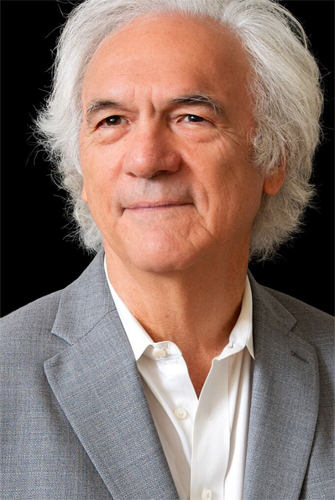
Brian Swimme
BRIAN THOMAS SWIMME is Director of the Third Story at Human Energy and professor emeritus of evolutionary cosmology at the California Institute of Integral Studies in San Francisco. Swimme did his doctoral work in gravitational dynamics in the Department of Mathematics at the University of Oregon. His media work includes the video series, “The Story of the Noosphere,” created with Monica DeRaspe-Bolles and Devin O’Dea, and the Emmy-award winning “Journey of the Universe” film, written with Mary Evelyn Tucker. His most recent book is Cosmogenesis: An Unveiling of the Expanding Universe.
My 10 Best
(In no particular order)
Holy Bible
A friend once described the stories in the Bible as “tectonic.” I love that. It certainly describes the effect of the Bible on Western humanity. Of course, there are several other tectonic books humanity has created—Tao Te Ching, the Sutras—but by the time I got around to those massive worlds, my child’s soul and brain had already been massively constructed inside the Bible’s narratives.
The Odyssey
As with the Bible, the Odyssey was implanted so early and so deep I never became a sophisticated reader of either. On some level of soul, I still regard as factual history the story of Odysseus clinging to the belly of a beast to escape from the cave. I didn’t fully grasp the strength of this naiveté until I traveled to Greece when I was twenty. A moment came when I experienced a subtle shock as I took in the deflating realization that Cyclops was not hiding out there on some obscure Greek island.

The Complete Works of Shakespeare
Not every play, and not every line in any play, but in the vast majority of his work, Shakespeare is convincing proof that divinity is present but unseen, and that the English language contains infinite powers for holding a mirror up to life.
The Divine Comedy
One of the central crimes of scientism is its offhanded dismissal of the Divine Comedy as “mere poetry.” Thomas Berry thought otherwise. As a monk, he turned to Dante’s great vision more than to any other work. When he agreed to take me on, his primary mode of teaching was to lead me step by step into his deep understanding of the Divine Comedy.

Process and Reality
One of the happiest memories of my life, which I render in Cosmogenesis, is the moment Thomas Berry got me to see the fundamental difference between two giants. Though their books express a profoundly similar vision of the universe, Whitehead leans toward philosophy, Teilhard toward science.
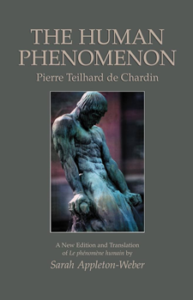
Human Phenomenon
As a teenager in a Jesuit high school, I took in Teilhard without any awareness that his synthesis of science and spirituality was controversial. It wasn’t until grad school—my first experience of secular education—that I learned both the Catholic Church and Mainstream Science rejected Teilhard whole-heartedly. Ever since then I have refused to use the word “Teilhardian.” For me, Teilhard’s vision of the universe is more accurate than the scientific materialism of most contemporary scientists.

Crime and Punishment
The great Dorothy Day recommends reading the Brothers Karamazov if you are in search of a deep understanding of love. I don’t disagree, but once again, the order in which one reads Dostoyevsky matters. It just so happened that Crime and Punishment came first.
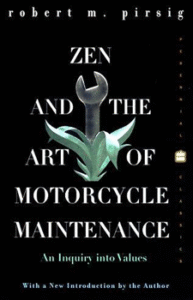
Zen and the Art of Motorcycle Maintenance
Pirsig explores our fundamental dualism which he casts as Western technology vs. Asian mysticism. What captured my imagination most was his decision to tell the story of his intellectual breakthroughs while riding a motorcycle across the continent. I have employed his approach in my writing, usually in timid ways, but full blown in Cosmogenesis.

On Becoming a Musical, Mystical Bear
By the time I read this in my mid-twenties, I had already heard thousands of sermons and lectures on Catholicism, but none of them contained phrases like, “the spirituality of Einstein.” His book led to our collaboration which has been going on now for over forty years.

The Dream of the Earth
When Lauren Artress writes of finding one’s “soul assignment,” she is describing what happened to me when I read Thomas Berry. Henceforth, I knew why I was here. Billions of others discovered something similar with their own teachers. It’s how the noosphere works. However original we might be, we all work inside lineages. Mine is Teilhard-Berry.