Smiling Curmudgeon | Stand-up Guy
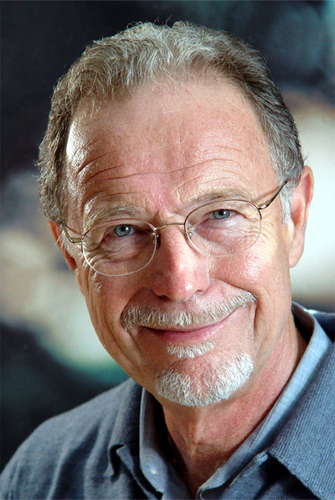
Fred Miller
FRED MILLER is a teacher, therapist, and bestselling author whose personal journey into yoga, meditation, and stress mastery was sparked by years spent navigating the high-pressure world of television and advertising. A certified Viniyoga teacher and yoga therapist, a lecturer at the UCLA school of medicine, and the author of several bestselling books, including how to calm down even if you’re absolutely, totally nuts, the back pain cure, and yoga for common aches & pain.
A student of Tai Chi, Chi Gong, Aikido, Alexander Technique & FeldenKrais, Fred has traveled and studied in India, Nepal, Tibet, Jerusalem, Bhutan and the Rain Forest of Peru.
He has lectured at the UCLA School of Medicine, has taught relaxation techniques to cancer patients and was certified by the California State Bar to teach Meditation to attorneys.
www.howtocalmdown.com
fred@howtocalmdown.com
My 10 Best
(In no particular order)
Tap a book cover to read his thoughts about the book.
Freedom from the Known
This is the most challenging book I have ever encountered. Krishnamurti asks us to take a very deep look at how we think and how we act in the world. “The known is the prison of the mind, and only through freedom from it can one truly live.” “Not letting past experience/the known, cloud our perceptions/our senses, is freedom. Freedom to see, act, live, wholly and sensibly, moment to moment” “To be free of all authority, of your own and that of another, is to die to everything of yesterday, so that your mind is always fresh, … “
Man’s Search for Meaning
Arguably the most important book of the 20th Century, Man’s Search for Meaning poses the question ‘Why Am I Here’. After a horrifying experience, where will I find meaning or put it another way, how may I be of service to others. Viktor Frankl chronicling his experiences as a prisoner in Nazi concentration camps during World War II, and describing his psychotherapeutic method, which involved identifying a purpose to each person’s life through one of three ways: the completion of tasks, caring for another person, or finding meaning by facing suffering with dignity.
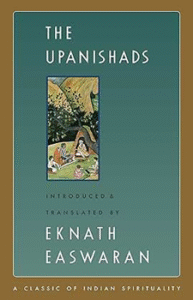
The Upanishads
The Katha Upanishad is the legendary story of a 16 years old boy, Nachiketa – who meets Yama (the king of the dead). Their conversation evolves to a discussion of the nature of man, knowledge, Atman (Self) and moksha (liberation). *Note: For instructions on How to Die see Bhagavad-Gita 8. 12, 13
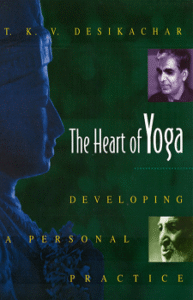
The Heart of Yoga
The book is full of outstanding yoga asana sequences. Plus, an easy, beginner level translation and commentary of the sutras. Yoga Sutras of Patanjali – Chapter II Sadhana (Practice) Pada – For those of us who have not yet reached Samadhi. YS II.1 Kriya Yoga –Tapas – Svadhyaya – Ishvara Pranidana Tapas: self-discipline. Svadhyaya: repeated, deep study of sacred wisdom and the introspective search into the nature of the self; meditation; mantra (prayer) repetition. Ishvara pranidhanam: wholehearted devotion and dedication to Ishvara (Lord).
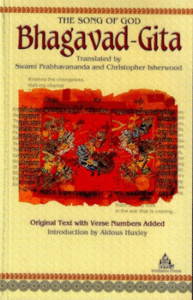
Bhagavad-Gita
This edition has the Gita verses numbered. This is a very readable version of the Gita. It may become a study test as it did for me. Here is some of the Philosophy to live by in the Gita. Chapter II.47 Renounce the fruits of your actions, offer the results of one’s work to Krishna. Chapter VIII. 12, 13 – The instructions on how to Die through the Crown (brahmarandhra) to reach Brahman (OM). Chapter XVIII. 47 – It is better to preform one’s own Dharma adequately than to excel in another person’s Dharma. This is just a taste of the philosophy you will find in the Gita.

The Way of a Pilgrim
The Peasant hears a sermon on “Pray without Ceasing”. 1 Thessalonians 5:16-18 – Rejoice always, pray without ceasing, give thanks in all circumstances; for this is the will of God in Christ Jesus for you. He wonders how to do that. The answer he finds is “The Jesus Prayer”. Used as a Mantra with every waking breath by some orders of Greek & Russian Orthodox monks. It’s not about Religion, it’s about Meditation.

Open Mind, Open Heart
This offers different ways of looking at Christianity. Here Keating is trying to rekindle the tradition of Mysticism, Contemplative Prayer & Meditation from early Christianity (300-600 CE) Again, it’s not about Religion, it’s about breath, mantra & meditation. As I say in my book, choose your own words that are special, sacred to you and synchronize the words on your breath as a doorway into meditation.

Original Blessing
In this book Matthew Fox (following in the footsteps of Meister Eckhart) lays out a whole new direction for Christianity—a direction that is in fact very ancient. Fox believes that the teaching of original sin has served empire-builders very well but that original blessing—the awareness of the goodness of creation—must take precedence.
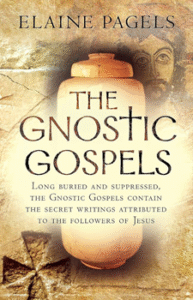
Gnostic Gospels
Explores the long-buried roots of Christianity and alternative perspectives of early Christianity as revealed through the Nag Hammadi texts that could have shaped the religion differently if included in the Christian canon.

American Veda
From Emerson and the Transcendentalists to Beatles to Yoga and Meditation American Veda chronicles the fascinating history of India’s impact on Western culture and probes the subtle and powerful ways it has changed what we know about our minds, our bodies and our spirits.