

Writer | Imaginator | Trouble-making misfit | Explorer |
Winn Taylor
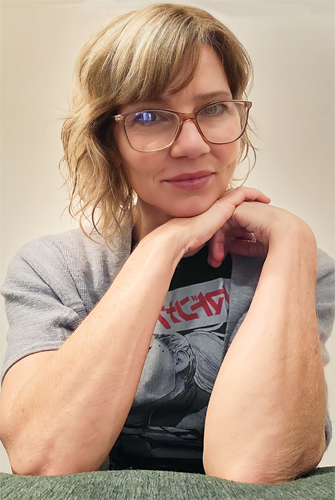
WINN TAYLOR – Who is she? Hmm, let me put it this way—she had to spell-check the word “genius.”
Then she searched for its antonym, which yielded a long list of hilarious terms, among which included “scientist,” according to wordhippo.com.
So… Winn is a scientist who is often uncertain about whether the English alphabet includes 24 or 26 letters. And despite her challenges with arranging them correctly, she gets paid to weave them into enticing marketing campaigns and wield them to shape highly-imaginative, metaphysical Sci-Fi novels.
She’s also a geek-wannabe with a background in Fine Arts and multiple certifications in those oddball, alternative healing modalities you’d only find in California. If she’s not reading or writing or creating art, she’s clanging a tuning fork while backpacking through some third-world country. And chances are, she can guess your rising sign.
Above all else, she’s a mere mortal, just like you. No prodigy, no guru; just a humble seeker navigating the vast adventure of existence, aspiring to master the art of being present—embracing everything exactly as it is.
WinnTaylor.com
My 10 Best
(In no particular order)
Tap a book cover to read her thoughts about the book.
The Story of Ferdinand
Little did I know, this seemingly simple tale about a peaceful bull named Ferdinand caused quite a stir over the years. Accused of everything from fascism to pacifism, this book was banned in various countries, including Spain, and even faced condemnation from Adolf Hitler. Yet, amidst the controversy, it garnered praise from influential figures like Gandhi and Eleanor Roosevelt. According to experts, whoever they are, the key lesson of the book is the importance of being true to oneself and embracing one’s own individuality. That wasn’t my takeaway, even as a kid. I was just drawn to the sense of peace that seemed impervious to the drama of the world around him. Ferdinand wasn’t trying to ‘be’ peaceful any more than water aims to be wet; he was, simply, the unstoppable flow of serenity. What Ferdinand represented for me, left an indelible mark.
Healing with Color and Light
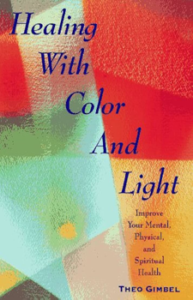
Around the age of twenty-four, I left home for greener pastures, following my buddy Ferdinand’s lead. My journey kicked off with summers on Martha’s Vineyard and a particularly chilly winter in Boston. The island offered my first glimpse into a bohemian lifestyle, embracing fringe folks offering energy healings and setting up crystal shops. It was all foreign to a girl hailing from Charlotte, N.C., where Izod was practically a uniform—a preppy haven and a world that always felt ill-fitting. Combine that with a rowdy upbringing, and you’ll have yourself a good ole fashioned misfit. In fact, I recall looking out over the Charles River in Boston, where I would take long runs, and think to myself, “I don’t belong here.” Not Boston per se, but Earth or possibly life among humans altogether. I felt like a fish outside a fishbowl, looking through the glass and wondering what exactly I wasn’t understanding about this whole thing called life. It was not comfortable. At all. Since I wasn’t inclined to “talk-about” anything below the surface, I was left with employing a more covert approach for fixing my body, my brain, or whatever the heck it was that seemed broken. That’s when I stumbled onto this book. Now, I’m not suggesting that my brain could wrap itself fully around the complexities involved in the universal principles of light and color, but I didn’t need to. All I needed was a crumb and whiff of something bigger to latch onto, and the notion that maybe there was way more to life than meets the eye.

Atlas Shrugged
I have to be honest, besides the aforementioned Ferdinand and Theo’s deep dive into color, I’m pretty certain I didn’t crack a book before the age of twenty-five. In fact, I’m not altogether certain I got my high school diploma fair and square. More than likely, the school staff was simply exhausted with the likes of me and my brother and decided it’d be easier to shuffle me along. Well, at the age of twenty-five, “Atlas Shrugged” landed in my illiterate little hands. I was headed off to backpack through Nepal when my then-boyfriend handed me this book. Honestly, I’m pretty sure he was nudging me to level-up. Fortunately, hiking through the Himalayas is absent of distractions, especially when you get snowed in. With a shrug, no pun intended, I curled up with Atlas and waited for the snow to melt. I began to, dare I say it, contemplate. Huh. What if the brainy elite did decide to keep their genius to themselves? Ayn’s self-interest agenda aside, her work inspired me to think. Actually, THINK.

Hands of Light
“Alright, buckle up;” that’s what I should’ve told myself when I picked up this book during my third tour of duty on Martha’s Vineyard after a long stint in India. Page one, the realization struck: “I’m out of my depth here.” I was in for a full-on, deep dive into confusion, featuring something called the human energy field. I had no idea that we weren’t just these physical bodies cruising—scratch that—stumbling through life. And what the heck is a channeler? This was just the tip of the iceberg, but I was hungry for it. Now, I’m not the type to gobble down a book this dense. I snack on it, absorb bits, and then go on a quest for tactile ways to understand what it’s talking about. That’s when I stumbled onto energy healing and Polarity practitioners. The sessions soothed something beneath my skin, over time, of course. But I was feeling the results, so eventually, I dove in deeper and got certified in Vibrational healing and geeked out a little on sound healing. But hey, that’s a whole San Francisco saga for another time. This book got me thinking: there really is something happening behind the scenes; it seems like tapping into it is the only way to push beyond life’s messy parts and settle into this skin.

Jonathan Livingston Seagull
After completing my fifth spring/summer on Martha’s Vineyard, punctuated by winter/fall travels, the call of the West Coast beckoned. Armed with this tender read, gifted by my mom, I packed up a U-Haul and set my sights on San Francisco. Normally, it would be hard to pick my favorite of Richard Bach’s creations, but mom was behind my first intro to his works, so that trumps all. It’s likely that I would have selected this heartwarming tale about a seagull with big dreams. Besides, who can resist a bird that craved more from life, pursued those desires, faced exile for being different, but in the end, honed his skills and embraced love and kindness. That little creature gave hope to us all; he wasn’t immune to self-doubt and moments of sadness. We all experience anxious times, but he taught us that the power comes from pushing forward. Not only that, but the joy in life lives with our passion. Follow them; they will feed your soul. This was my first experience with a book that delivered the path of the spiritual warrior in fictional prose. I’m certain that I didn’t realize the underpinning of the story at the time, but much like Ferdinand the Bull, it resonated deeply, nonetheless.

Tao Te Ching
Mastering yourself is true power. Oh, San Francisco, you inspire rare birds to reach for more. At some point during my twenty amazing years in San Francisco, I stumbled onto Lao Tzu. Its simplicity is deceiving. It’s layered. I’m a slow reader and tend to get overwhelmed by some of the meatier books. But Lao Tzu’s words are ripe with contemplation. It meets you where you are, yet has so much depth; offering new insight as you evolve. It’s a beautiful encapsulation of his deep contemplation. The fruit of his efforts. He doesn’t pave your path, yet he gives you benchmarks for the journey. It’s not about escaping this world, but mastering the art of living with profound beingness. I am moved (and stilled) by every word he’s laid down.

Do Androids Dream of Electric Sheep?
Along with the Futurist’s vision led by Ray Kurzweil and Martine Rothblatt, this novel sparked my curiosity about the evolution of technology. Where better to indulge my inner-nerd than swimming through the Bay Area’s hotbed of data-dorks and treading the same San Francisco streets as our novel’s protagonist? A lingering question emerged: Who gets to determine the legitimacy of a being, whether organic or inorganic? Unfortunately, given humanity’s wavering empathy toward other forms of life, including their own, I don’t have high hopes we’d approach the topic with rationality or regard. Visions of pitchforks and town stonings come to mind. Philip K. Dick’s novel dove into this topic well before it entered humanity’s consciousness, questioning the significance of empathy through Rick Deckard, whose compassion extended beyond organic beings. The novel prompts the question: Is being human more a philosophical determination or a biological inheritance? It’s interesting to note that the premise was inspired by the journal of a Nazi officer who complained about being “kept awake at night by the cries of starving children.” Philip began thinking of people who lacked any empathy as “androids,” making empathy the novel’s crucial barometer for distinguishing between androids and humans, complicating how the world treats them. For me, it begged the question: if it exists, isn’t it a unique reflection of source at play? Isn’t it all? If so, then what?

Becoming Supernatural
By the time I picked up this book, my partner and I were completing major home renovations in preparation to sell our fixer-upper. We’d soaked up San Francisco’s zenith years like rock stars – twenty of them. Sadly, we needed to say farewell and head back East. Joe, along with his amigos, Gregg Braden, and Bruce Lipton, turned the daunting task of rebuilding a total gut-job-of-a-house into an opportunity to level up. These guys made my years of manual labor a spiritual practice. I listened to them speak for hours on end while racking up sweat equity. One of the things that I love about this book is Joe’s uncanny ability to turn esoteric ideas into commonplace practices. And I didn’t have to be a neuroscientist or epigenetics ace to begin to grasp the brain-body connection. It was seriously an eye-opener to learn that the body gets addicted to emotions, so much so that you might not know which came first: an emotion or the thought that adjoined it. And consciously elevating my vibration became priority number one. This isn’t a book drenched in what some may call spiritual mumbo-jumbo; it’s a practical guide for those seeking transformative advice. It delivered that and more.
Magicians of the Gods
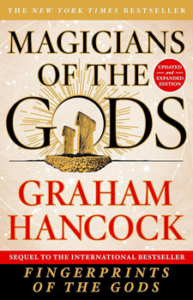
What would a cross-country move be without a solid wing man? Graham kept my partner and I company as we drove, with two cats, and headed for the sunny sands of Florida. Like all of Graham’s books, this is a dense read, but I was already a big fan before I ever picked it up. Lucky for us, Magicians was available on audio. We could lose ourselves in his charismatic yet soft-spoken voice as we trucked along the highway. For starters, I’m a sucker for so many of the ideas he’s presented over the years, like ancient sound technologies used by Egyptians, the inexplicably complex equations found in so many of the Earth’s ancient sites, and advanced ancient civilizations that predate our ‘official’ history. Whether right or wrong, he presents a captivating narrative and reshapes the way we perceive history. His work, and that of others like him, left me realizing the importance of peeling back the layers of history as it’s been handed down, questioning the idea that maybe knowledge has been suppressed. If so, then why?
Monk & Robot series
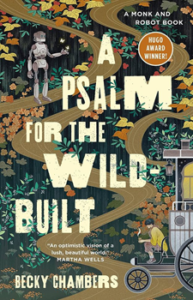
“Sometimes, a person reaches a point in their life when it becomes absolutely essential to get the fuck out of the city.” – A Psalm for the Wild-Built It’s a fitting opening line to herald in a new city. And what better way to warm up to Florida—the polar opposite of California, by the way—than an equally wide pendulum swing from Philip K. Dick’s stirring tale? For anyone who isn’t familiar with the series, I’ll begin with the story’s premise. In the tranquil realm of Panga, our protagonist, Dex—an agender Tea Monk—departs utopia on a quest to find that which is missing from their life. Not long after Dex exits the haven, Mosscap, a self-aware robot, emerges from the rewilded nature, elected to reestablish human contact with one small question: “What do humans need?” This protagonist brings to mind Ram Dass and the ‘something is missing’ feeling that inspired him to ditch Richard Alpert to answer this question for himself. Fortunately, he brought the rest of us along on his beautifully-wild, willingly-vulnerable, and occasionally-messy ride. So … can ‘what’s missing’ be found? Or is the inescapable nature of life both a state of harmony and discontent? Would life even be possible without the balancing of the two? Or are we creating reality as we perceive it, moment to moment? I dunno. This series certainly doesn’t aim to solve this or any other existential crisis; its impact is its ability to coax readers into deeper inquiries and encourages a dialogue with yourself. Often, we don’t need answers, assuming there are any. We just need to learn to trust ourselves as stewards along our own path.