Teacher | Author | Listener | Mother | Questioner | peanut-butter-spreader |
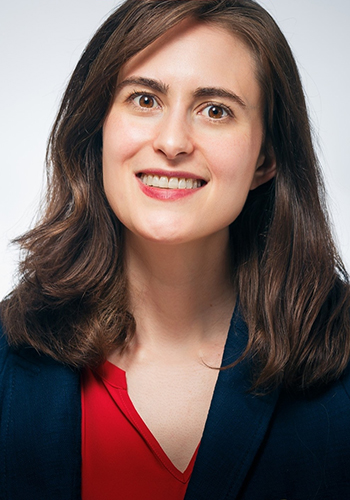
Rebecca Rolland
REBECCA GIVENS ROLLAND is an oral and written language specialist in the Neurology Department of Children’s Hospital Boston and a lecturer at Harvard University. As a nationally certified speech-language pathologist, she has worked clinically with populations ranging from early childhood through high school and provided teacher professional development.
As faculty and Module Director at Harvard Medical School, she lectures on topics of communication, mental focus, and creativity. She frequently consults with organizations working to design powerful learning experiences for kids and adults, including the World Bank. She has an Ed.D. from the Harvard Graduate School of Education, an M.S. in Speech-Language Pathology from the MGH Institute of Health Professions, an M.A. in English from Boston University, and a B.A. in English from Yale. She lives in Boston, Massachusetts with her husband and two children.
RebeccaRolland.com
My 10 Best
(In no particular order)
Tap a book cover to read her thoughts about the book.
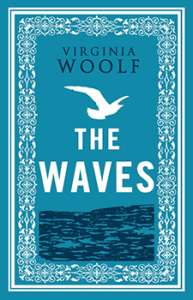
The Waves
This book is purely astonishing and has been so important in informing the ways I think about writing and the nature of experience. It’s told in soliloquies, and has as one of its major themes the desire to imprint a moment before it passes. Truly, if you are interested in mindfulness, the “now,” or what it means to be present with all the senses, the poetry of this novel cannot be missed. For me, it’s opened up my understanding of what we can do with and through language; and, on the contrary, all that language cannot fully capture in our human experiences. There is a great interest in the novel in exploring the consciousness of each individual character, and the result is an elegant kaleidoscope.
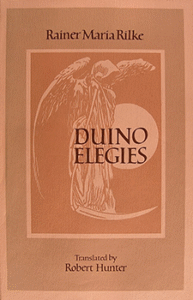
Duino Elegies
As a college student, I nearly majored in German, a language I’d studied for years. For one course, called “German Poetry in Performance,” we were all asked to memorize German poems and recite them aloud in front of an audience. In this way, I grew to love many German poems from the inside out—both for the meaning and sound—but Rilke stands out, and especially his mystical, philosophical Duino Elegies. “Who, if I cried out, would hear me among the angelic orders?” the poems begin—and from then on, the poems are powerful considerations of terror, beauty, the human condition, and the desire of humankind to reach beyond mortality. These poems are worth reading for the musicality alone, but much more so for the ecstasy and desperation they combine.

Inner Engineering: A Yogi’s Guide to Joy
This book is well-loved, and for good reason. As Sadhguru argues, “When pain, misery, or anger happen, it is time to look within you, not around you.” It discusses how yoga is not simply the poses one takes, or simply the body’s physical manifestations, but that it has much more to do with being present, moment by moment, in the face of all life’s experiences. Whenever the book starts feeling abstract, he throws in a funny parable to bring a point home. For me, the book’s exercises have been particularly helpful in beginning a mindfulness practice. For example, he talks about simply noticing the boundary between waking and sleep, both when you sleep and when you wake in the morning. These small moments, practiced often enough, accumulate.
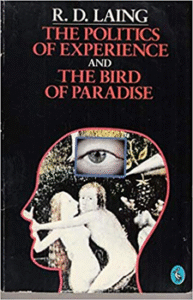
The Politics of Experience
“We are bemused and crazed creatures,” as the psychiatrist R.D. Laing wrote—and it is the need and compulsion to conform and pretend otherwise that creates frequent mental illness, anxiety, and exhaustion. I’ve found Laing’s work, including his talk of conversations with children, incredibly compelling, in that he is extraordinarily open to all varieties of human experience and the need to express them, rather than tamp them down. In a world of too frequent toxic positivity, I’ve been moved by his discussion about the positive value of emotional turmoil and the potential creative value of experiencing hardship and even the edges of “sane” experience. Of course, there are limits to this perspective, but I’ve too often seen an emphasis on only a narrow version of experience as acceptable. Laing’s work has opened my mind to the ways the world is “existentially distorted” and that acting “normal” in such a world may not always be a positive.
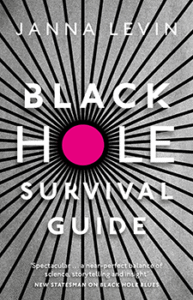
Black Hole Survival Guide
Levin’s book literally explores the path by which one could (not) survive a black hole, in a dreamlike, poetic work that nonetheless takes the reader into the latest science of astrophysics and quantum reality. Her use of metaphors and imagery allowed me to go more deeply into an understanding of these questions than many other books on the subject I’ve read. For instance, she talks about why “black holes have no hair”—at least, not for long—and uses the metaphor of music frequently, for example, why a single sound cannot be simultaneously only one note and a chord. The ways she describes the universe as a potential hologram is fascinating, allowing the reader to tiptoe to the very edges of our reality and explore what is currently known. Whether you’re astrophysics obsessed, as I admittedly am, or simply curious about our reality, I highly recommend this one.
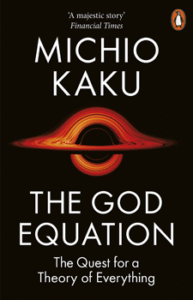
The God Equation
I’ve been a big fan of Kaku’s books for some time, and I count this one among my favorites. It’s like a detective novel in physics form, taking as its subject the quest for a single theory that would unify “everything,” as that quest has consumed physicists over the ages. Even if you’re not interested in physics, the debates and scientific arguments over decades and centuries makes for a fascinating look into the history of science. And if you are interested in the big questions, like “What happened before the Big Bang?”, this book takes you on a relatively accessible and action-packed journey to understand the possibilities—and especially to point out what’s not yet known.
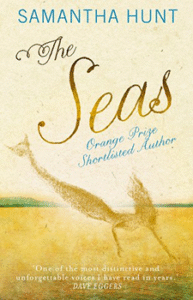
The Seas
This novel allows for a fantastical blend of the real and the impossible, ultimately opening us up to the idea that transformation can be a true part of human experience. In the words of the narrator, “If one word can mean so many things at the same time then I don’t see why I can’t.” In the novel, which I’d loosely describe as magical realist, sensations become emotions, become actions; for example, “I was in love so badly that it was affecting my vision.” In another book, such comments might come across as clichés, but the narrator means it seriously, as she does her desire to become a mermaid. Ultimately, the book is a poetic look into the nature of consciousness and reality, and the ways that all our perceptions are partial and illusory. It has inspired my work as a creative writer and teacher, in feeling less bound to “what actually happened,” and more open to asking, “What if?”
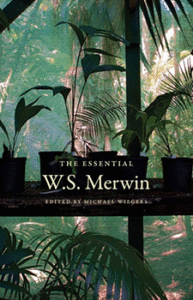
The Essential W.S. Merwin
As a practicing Buddhist, Merwin has always impressed me with the quality of his attention and the ways he’s able to move fluidly on the page, as if his poems were alive. With unadorned language and minimal punctuation, Merwin seems to be able to access the mind’s most distant regions and its imprinted, ancestral memories. Since I had the chance to hear him read—a magical experience—I’ve kept him in mind as a model of how to pay attention deeply and how to live out one’s spiritual values. This collection is truly “essential,” moving from his early works to his final poem.

Lost in Math
If you have anxiety dreams about math class, or have kids who are frightened of math, this book provides a totally opposite take. In fact, it’s a highly philosophical and even political book, focusing on how our obsession with beauty in mathematics has led physicists to improper biases. Wanting mathematical consistency above all else, Hossenfelder argues, physicists have been swayed by the idea that “naturalness” means goodness. This pull toward what feels “natural” has influenced the experiments they attempt, the conclusions they draw, and even what they consider to be “truth.” I found her argument persuasive in itself, but even more so, I’m reminded of how we all have our own assumptions and biases that shape what we teach, think, and believe. This goes, of course, far beyond math. This book is a great reminder to be aware of those assumptions and keep them in check—and stay open to having one’s opinions and beliefs deeply changed.
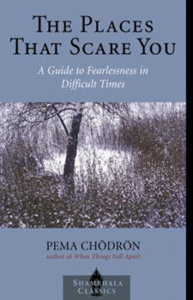
The Places That Scare You
Choosing only one of Chödrön’s books is difficult, since I have kept them close as guides for many years. This one wins out because it is so accessible and practical for dealing with the fear and paralysis that comes with challenging yourself and trying new things—or simply the challenge of finding yourself in a tough spot and not knowing how to get out. Her language, for a Buddhist monk, is wonderfully grounded and realistic; for example, “All too frequently we relate like timid birds who don’t dare to leave the nest. Here we sit in a nest that’s getting pretty smelly and that hasn’t served its function for a very long time.” While it might feel comfortable enough to sit in a smelly nest, she graciously reminds us that it smells—and we would do well to make a change somewhere.