

Authentic | Courageous, Outspoken | Justice and Earth Activist | Loves walks in nature with his Dog
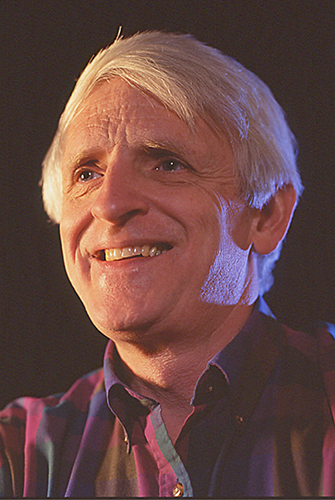
Matthew Fox
Matthew Fox is a spiritual theologian, an Episcopal priest and an activist for gender justice and eco-justice. He has written 39 books that have been translated into over 60 languages. As founder of the University of Creation Spirituality in California and The Cosmic Mass, he conducts dozens of workshops each year and is a visiting scholar at the Academy for the Love of Learning. He is the recipient of many awards including: The Abbey Courage of Conscience Peace Award. Recent projects include Order of the Sacred Earth and Daily Meditations with Matthew Fox as well as The Cosmic Mass
www.matthewfox.org
www.dailymeditationswithmatthewfox.org
My 10 Best
(In no particular order)
Tap a book cover to read his thoughts about the book.
War and Peace
When I read this when I was 16 year-old, I told a friend it “blew my soul wide open.” I didn’t have words for what happened but, of course, now I know it was a mystical experience. One lesson it taught me was the importance of writers and other artists to “blow the soul wide open.” I wanted to explore what happened to me and that had a lot to do with my joining the Dominican Order to explore spiritual experience more fully. One commentator on Tolstoy said about the book (a comment I read many years later), “if life could talk, it would speak thus.” It gave me an impassioned and broad and deep understanding of what life was about. (Many years later I learned it was Tolstoy who woke Gandhi to Jesus and the gospels.)
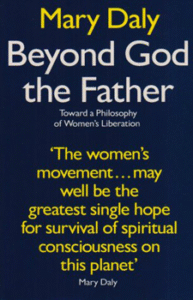
Beyond God the Father
Mary Daly was one of the pioneers of feminist theology and held two doctorates, one in the medieval theology of Thomas Aquinas. When I read this book, when teaching women at Barat College in about 1972, I was so excited that I called her on the phone (she lived in Boston) and thanked her and said: “Your book makes Karl Marx look like a pansy.” A long silence ensued and she then said, “thank you very much.” Why did I say that? Because she was critiquing not only the world of the industrial revolution such as Marx did, but the world of language and pronouns as well. She was a prophet in interfering with patriarchal consciousness. I later invited her to speak at Barat College and she made a deep impression. Forty percent of the faculty got up and left when she said, at Q and Atime, that men should not ask questions but should listen to women’s questions since they had sat for many centuries listening to men.
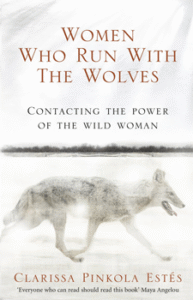
Women Who Run with the Wolves
On reading this book, I also was moved to phone the writer out of the blue and thank her for her wonderful contribution to spirituality and to incorporating both women’s wisdom and indigenous and shamanistic world views. I said to her, “this is the most important book on spirituality in the 20th century” and that “she seemed to me to be the Teresa of Avila for our time.” She said Teresa was her favorite saint, so that seemed to work out. Later, we taught together at my University, a course on “Evil” and I learned a lot from her, as I always do. She brings great depth and a Jungian understanding to these ancient stories. I cite her in my book on Creativity: Where the Divine and the Human Meet for her instructing us in what the wild woman (and man) is all about including being patroness of all creative workers and one who “thunders after injustice” from her gut.
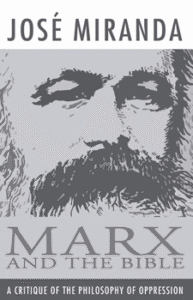
Karl Marx and the Bible
Liberation Theology is a theology that begins with suffering and the injustice that makes so much suffering happen. It culminates with action to relieve that suffering. Jose Miranda is one of many Latin American Liberation theologians but one sentence in particular stays with me from his book that is of the utmost importance. It reads like this: “The greatest tragedy in theology has been the separating of love and justice. The Hebrew Bible does not separate the two.” But clearly we have separated love from justice over the centuries far too often in order to champion the building of empires. The result has been sentimentalism in religion and culture and the sidelining of justice. As Meister Eckhart says, “compassion means justice.”
The Universe Story
Physicist and Cosmologist Brian Swimme joined my faculty in my ICCS program (Institute of Culture and Creation Spirituality) at Mundelein College in Chicago to teach science and spirituality. Together, we invited Tom Berry to come and lecture one January day and we were both moved by his presentation. The next year, Brian went to study with Tom in upstate New York and several years later he and Tom wrote The Universe Story that tells the new creation story from science from the fireball up to today. The book is foundational for grasping the good news of a common creation story from science that all peoples can share. It also can undergird other creation stories that are more ancient and mythical but still full of wisdom. Bringing the new creation story alive invigorates people and tired institutions from religion to education to politics to economics. It offers a fresh start, a new paradigm, a deeper appreciation of our existence that has a 13.8 billion year history. And by “our” I mean all creatures on earth and in the universe. It brings awe alive.
Nature, Man and Society in the Twelfth Century
Chenu was a great historian of the Middle ages and my mentor at the Catho in Paris who named the creation spirituality tradition for me. He was also an important peritus or theologian advisor at the Second Vatican Council and had been silenced by Pope Pius XII for 12 years for his work with Marxists and the worker priest movement in France after WWII, and for his writings on a new educational model for seminaries. This book is a collection of essays of his translated into English and published by the Univ. of Chicago press and is considered a classic. His treatment of the scientific awakening of the middle ages, of the humanism to be found in the Gothic Cathedrals (especially Chartres), of art, of “Nature and Man—the Rennaisance of the Twelfth Century”—a renaissance he says was the only one that worked in the West because it was not top-down like the 16th century renaissance was; “Theology and the New Awareness of History; “Monks, Canons and Laymen” and “The Evangelical Awakening” all treat a foundation for understanding the historical conflicts and movements that grounded and resulted from that renaissance. I used this book as a text book with undergraduates at Barat College for women and found young women and middle aged women were moved by his many insights into religion and culture and his special understanding of the Middle Ages.

The Genesis of Faith
Merkle is a lay Catholic theologian who did his doctorate on Heschel at Louvain University in Belgium. This book is a remarkable source for Heschel’s abundant and inspired writings, for it provides a kind of compendium of his writings and ideas, all neatly arranged by topics with passages taken from his many books. That it was gathered by a Christian is all the more interesting. In addition to Heschel’s biography, such categories as these are addressed: The study of Religion and Depth theology; The Sublime Mystery; The Divine Glory; The Dynamics of the Jewish Tradition and its “Wellsprings” including Revelation and The Bible, God, Torah, Israel. And the Antecedents of Faith including Wonder and Awe; Indebtedness and Praise; Remembrance and Mitsvah. An excellent Index allows for a deep exposure to Heschel’s many writings. Reading Heschel, for me, brings me closer to the thinking of Jesus since Jesus was a Jew; I feel like I am listening to rabbis that might have instructed Jesus along his way.
The Transformation of Nature in Art
This book constituted my first real introduction to Meister Eckhart. When I first read it, I came upon a chapter on Eckhart that astounded me for it contained entire sentences from Eckhart (whom I had not read) that I had written and published in an article on “Sacred Space and Sacred Time” a year prior. I was so spooked out that I put the book back on a shelf and did not finish it. A few months later I went back to the shelf gingerly and took the book down and did finish the chapter on Eckhart. And I knew I had a destiny with this brother of mine which was confirmed when I had an operation due to a serious car accident and Eckhart came to me during the operation and we went walking together on a beach in silence. In this important book, the author, who was fluent in 36 languages (!), and was a Hindu who worked in an art museum in Boston for many decades, says this about Meister Eckhart. “Eckhart’s Sermons might well be termed an Upanisad of Europe….Eckhart presents an astonishingly close parallel to Indian modes of thought; some whole passages and many single sentences read like a direct translation from Sanskrit.” Eckhart was a deep ecumenist without knowing it. I share the truth of this in my most recent book on him, Meister Eckharrt: A Mystic-Warrior for Our Times, where I put him in the room with Rabbi Heschel, Thich Naht Hanh, Rumi and Hafiz, Adrienne Rich, Carl Jung, Al Arabi, Black Elk, Coomaraswamy (of course) and more.

Centering in Pottery, Poetry, and the Person
I discovered this book after founding my Institute in Culture and Creation Spirituality (ICCS) at Mundelein College in Chicago in 1978 or so. Part of the design I created for the program was, along with intellectual seminars, body prayer and also “art as meditation” to exercise the right brain. This book very much affirmed my intuition that to offer a whole and balanced education, one that allowed spirituality to happen and not just be talked about, was art as meditation. I looked on this book as a “bible of art as meditation.” Psychologists Ornstein and Naranjo point out in their book on Psychology and Meditation that “extrovert meditation” (which I call “art as meditation”) is “the way of the prophets.” This is very important information. We want to educate not just mystics but prophets. For this, art is necessary, as Richards makes very clear. I wrote a lengthy review of her book Centering in which I celebrate her telling of how bodily all art is. We must recover the body if we are to have a real spirituality in our time, we must ground ourselves and become at home with the lower chakras which have been so neglected in education and religion in the West. It is our bodies after all that link us to the cosmos and to each other in the body politic. MC Richards later joined our faculty at ICCS in Holy Names College in Oakland and later at the University of Creation Spirituality in downtown Oakland. She taught courses on clay as meditation and also Poetry and Word as meditation and was a beloved faculty member and teacher.

Beyond Psychology
Pulitzer prize winning author Ernest Becker called Otto Rank’s Art and Artist the most important book of his life and he certainly applies many of Rank’s teaching in his important and heralded book, The Denial of Death. I agree with Becker’s love of “Art and Artist” and wrote a lengthy article about it. But Rank’s Beyond Psychology, his last book and published posthumously, is also a great book and I love how he brings social issues and psychological issues together so profoundly. The book has a chapter on Karl Marx and why he so appeals to the oppressed (because he offers hope essentially); and on feminism (Rank died in 1939), and why women and children also should not run after psychology (meaning Freudian psychology) because that is “man’s last attempt to control nature, this time his own” but should instead develop their own psychology. And much more. I love his emphasis on Creativity and his understanding that neurosis is the artiste manque whether our using our creativity to beat ourselves up with or our ignoring it altogether and projecting onto others. I find his insights deep and meaningful and good medicine for the soul not just of individuals but of societies as well. His respect for indigenous wisdom is explicit and the “original wound” that humanity inherits can be healed only by the unio mystica which is to be found in love and art. Rationality kills the soul and killed the Roman Empire and we must bring in the “irrational” that love and art represent for “life is essentially irrational.” An amazing man and feminist years before the word.